New research suggests wearable tech could shift from wristbands to discrete smart-clothing sensors for better motion and health data.
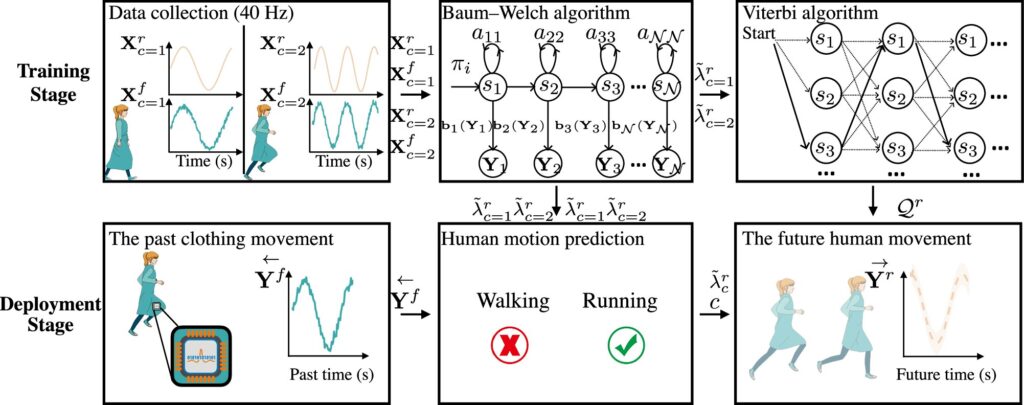
Scientists at King’s College London have uncovered that loose-fabric sensors such as those embedded in buttons or pins on everyday clothing may outperform traditional wrist-worn devices like Fitbit trackers when it comes to detecting human movement. Their peer-reviewed study, published in Nature Communications, indicates that motion data collected from loose fabric can be up to 40% more accurate and requires roughly 80% less data than sensors tightly attached to the body.
The key lies in how fabric responds to motion. Unlike snug wristbands or body suits, loose cloth billows and folds with movement, acting as a kind of “mechanical amplifier.” This dynamic behaviour makes subtle motions easier to capture, giving it an edge for applications ranging from everyday health tracking to motion capture for animation.
Researchers behind the work argue this could help overcome some limitations in current wearable tech. Wrist-based health trackers, such as those from Fitbit, sometimes struggle to pick up on very slight movements, an issue for monitoring conditions like Parkinson’s where mobility changes are nuanced. With fabric-mounted sensors in regular clothing, continuous monitoring could happen unobtrusively as people go about their daily routines, without the discomfort of tight straps or rigid wearables.
Testing across a range of fabrics and movement types confirmed that the loose clothing approach consistently outperformed traditional sensor placements. Beyond health data, the findings also have implications for robotics research and gesture-controlled interfaces, where high-quality motion data at lower bandwidths is valuable.
The concept points toward a future where smart clothing could supplement or even replace some current wearable devices. Instead of wristbands or smartwatches, a small, integrated sensor on a shirt button or lapel might serve as a discreet, comfortable health tracker that collects richer data with less effort. This research dovetails with ongoing interest in next-gen fitness and health trackers, including rumored new Fitbit hardware slated for 2026 and broader enhancements in wearable health ecosystems though the shirt-mounted approach represents a more radical shift from conventional form factors.