




A new miniature incremental encoder brings metrology-grade precision to space-restricted motion systems, offering high repeatability, clean signal output, and robust performance in demanding optical, semiconductor, and automation environments.
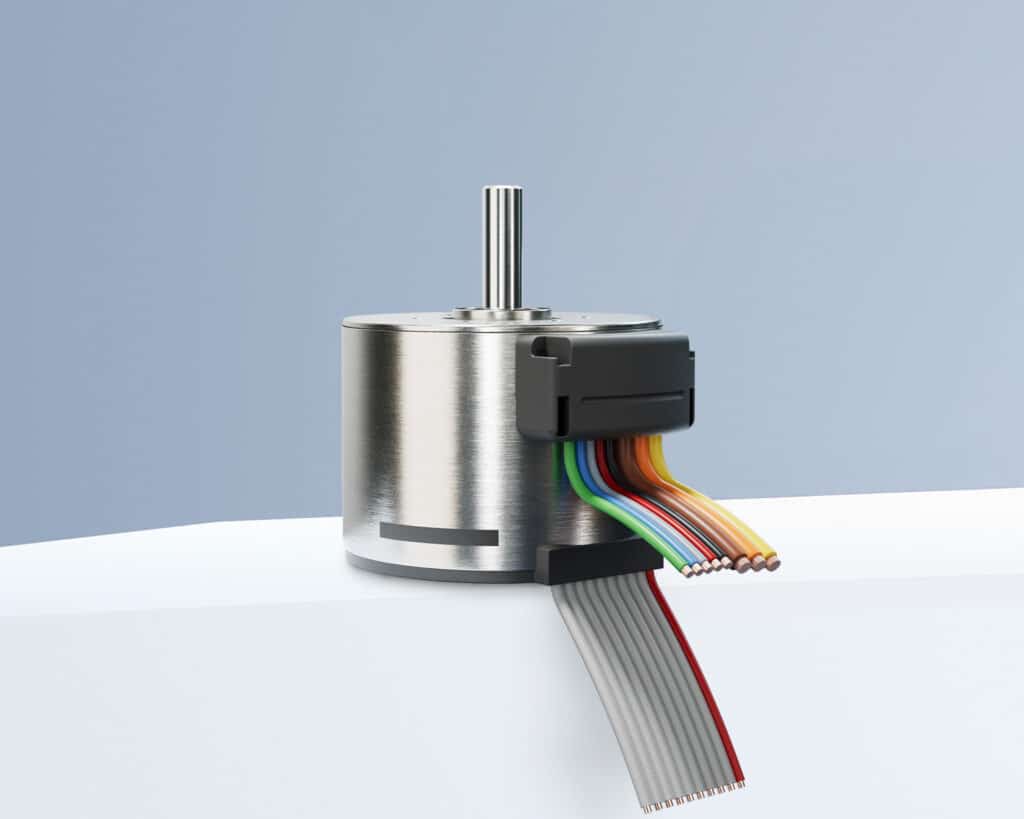
A new incremental optical encoder by FAULHABER GROUP has entered the motion-control market, space constraints collide. The device delivers 0.1° positioning accuracy and 0.007° repeatability, positioning it as a solution for engineers designing metrology equipment, optics modules, semiconductor tools, and compact robotic systems.
The encoder is built on an optical measurement principle paired with modern chip-level signal processing, enabling clean output signals even in electrically noisy environments. Unlike magnetic encoders, it maintains stability near motors, actuators, or other magnetic fieldsan advantage for tightly packed automation assemblies.
The key features are:
- Optical sensing architecture for high signal clarity
- Available in 22, 32, and 42 mm diameters
- Integrated Line Driver for long-distance signal integrity
- Resistant to magnetic interference in dense electromechanical setups
Engineers can integrate the encoder in three diameter formats22 mm, 32 mm, and 42 mm making it suitable for a range of miniature drives and high-density electromechanical setups. Each variant can also be paired with a brake, supporting applications that require both precise motion and rapid holding capability. A built-in Line Driver output stage ensures complementary signals and reliable transmission over longer cable lengths, addressing a common challenge in precision systems where sensors are mounted far from control electronics. This helps maintain signal integrity in industrial environments where noise, cable routing, and vibration disrupt weaker encoder outputs.
The compact form factor and high-resolution characteristics position this encoder for use in systems such as laser alignment tools, microscopes, telescopes, and advanced optical instrumentation. Its repeatability metrics also align with the needs of positioning axes in semiconductor fabrication, test-and-measurement devices, and high-precision robotic joints.
For design engineers, the value proposition lies in combining micromotor-class mechanical compatibility with large-system-grade accuracy. The encoder’s small diameters enable integration into flat miniature motors or space-restricted mechanical stacks without compromising feedback quality. By providing consistent incremental signals with low jitter, it supports closed-loop control loops that rely on smooth data streams for stability. As motion systems shrink and demand for sub-degree precision rises across optics, medtech, automation, and lab instrumentation, this new encoder aims to fill a gap between compact form factors and metrology-grade accuracy, an area where designers typically compromise.

