
A newly expanded lineup of ultra-compact reed relays adds fresh Form A/B/C and coaxial options, pushing switching density higher for automated test systems struggling with shrinking PCB real estate.
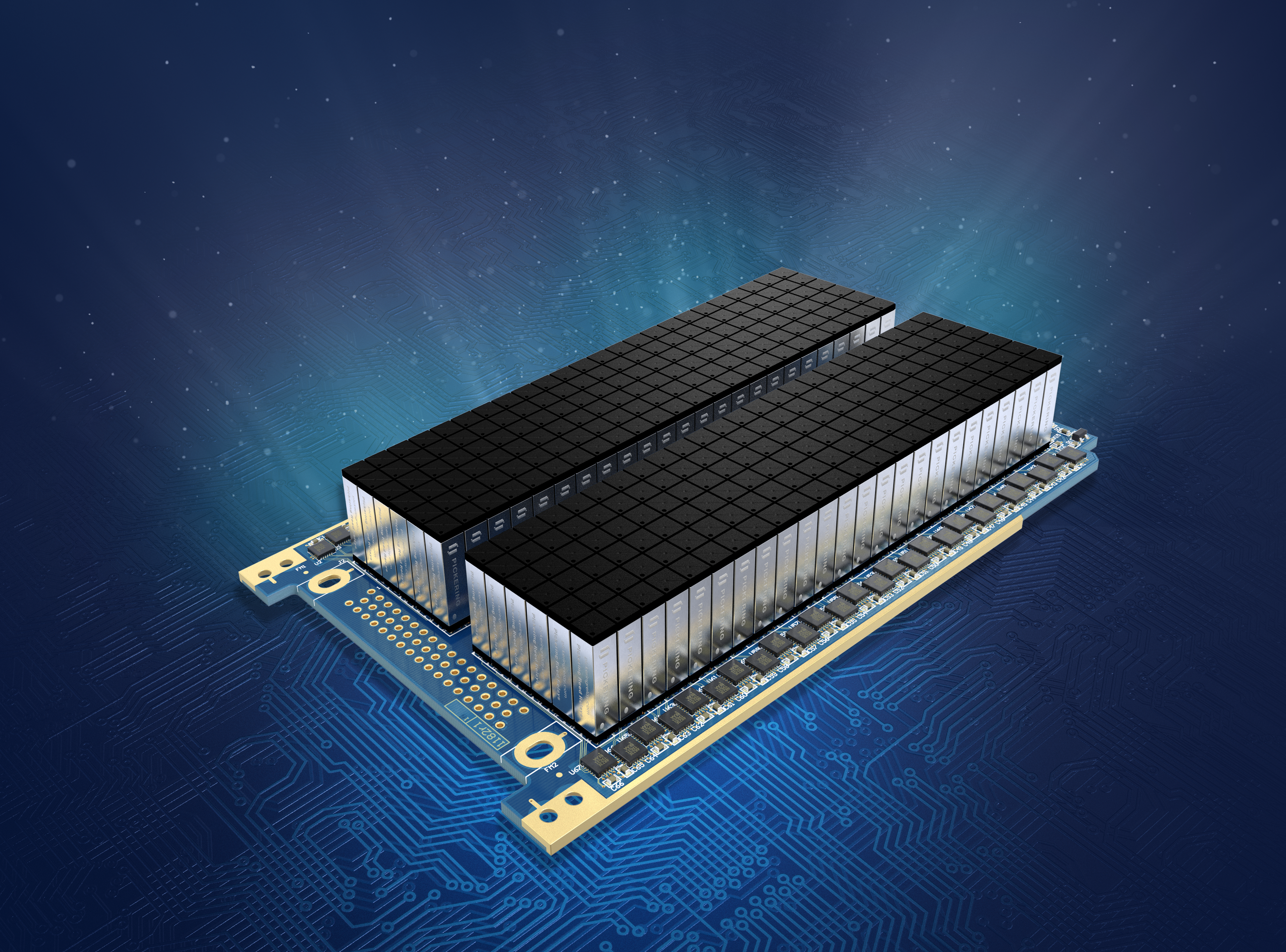
In automated test equipment (ATE) and dense switching matrices, board space has become the new bottleneck. Pickering Electronics latest expansion of its ultra-high-density Series 125 aims squarely at this challenge, adding 1 Form A, 1 Form B, 1 Form C and 1 Form A coaxial versions to a relay family already known for the smallest 2 Form A DPST footprint in the market. The new variants maintain the line’s hallmark 5 mm × 5 mm pitch while offering ratings up to 1 A, 20 W and coil options of 3 V, 5 V or 12 V.
The additions are designed for mixed-signal environments where low contact resistance and high insulation resistance determine overall test accuracy. Instrumentation-grade reed switches underpin the range, making the devices suited to complex routing on space-constrained ATE cards, multiplexers and instrumentation front-ends.
The key tech features are:
- New Form A, Form B, Form C and coaxial variants for higher routing flexibility
- 5 mm × 5 mm ultra-dense footprint with up to 1 A, 20 W switching capability
- Three switch types including low-level, high-power and rhodium changeover options
- 50 Ω coaxial version supports RF switching above 1 GHz
- Mu-metal magnetic shielding enables side-by-side placement with only ~1% interaction
Pickering has also widened the available switch technologies. The first two options use sputtered ruthenium contacts: a 15–20 W general-purpose variant with added copper beneath the contact layer to better manage inrush, and a 10 W, 0.5 A low-level type aimed at cold-switching or low-voltage applications. A third option introduces a 2 W rhodium changeover switch for precision applications where contact stability at lower currents is critical.
For RF-heavy test architectures, the new 1 Form A coaxial models support 50 Ω operation and switching above 1 GHz area where reed relays continue to outperform EMR, SSR and MEMS devices in insertion loss, response time and hot-switching robustness.
One of the Series 125’s defining attributes remains its mu-metal magnetic shielding. By cutting magnetic interaction from typical unshielded levels of ~40% down to around 1%, the relays can be mounted side-by-side without derating. This density enables up to 288 relays on a PXI BRIC matrix daughterboard, an attractive advantage for engineers designing large switching matrices or multichannel ATE subsystems
Additional options custom coil parameters, pulse-rated configurations, unique pin-outs and specialized lifetime testing extend the platform for OEM-specific requirements. With formless coil construction, Soft Center mechanics and 100% test screening, the expanded Series 125 positions itself as a high-precision, high-density building block for next-generation automated test platforms.