




A new generation of digital scopes delivers ultra-low noise, femtosecond jitter precision, and real-time bandwidth up to 25 GHz—reshaping high-speed validation, AI data center debug, and advanced physics research.
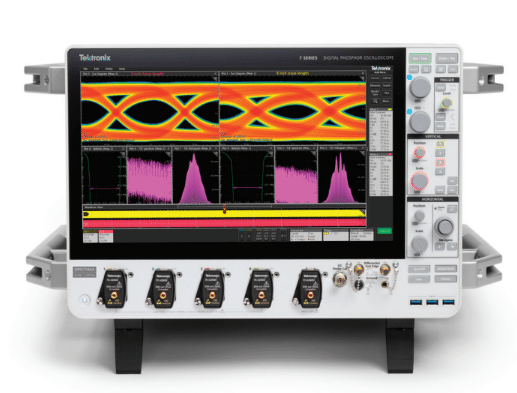
Instruments are stepping into new territory with the debut of a digital phosphor oscilloscope (DPO) 7 Series DPO series by Tektronix ,capable of up to 25 GHz analog bandwidth and 125 GS/s sampling on all four channels. Targeting the toughest frontiers in high-speed serial design, artificial intelligence data center development, and advanced physics experiments, the system promises the lowest noise, highest effective number of bits (ENOB), and lowest jitter in its class.
Engineers working on signal integrity, memory bus validation, or high-speed serial compliance testing are set to benefit most. By combining quiet-channel acquisition with active equalization to counter high-frequency signal losses, the platform delivers cleaner visibility into transient events and timing anomalies that traditionally challenge conventional scopes. The introduction of a 10 Gb Ethernet LAN SFP+ port further raises throughput, speeding up data transfer for labs where time and precision are equally critical.
The key features are:
- Bandwidth options: 8–25 GHz, all upgradeable
- Record length: up to 2 Gpoints
- 10-bit ADC for high signal fidelity
- Supports tasks from RF spectral analysis to next-gen interconnect debug
- Precision timebase delivers 60 fs jitter performance
- Built for low-latency, error-free systems in AI clusters and quantum research
In addition to raw performance, usability has been re-thought. The interface builds on the familiar TekScope environment and runs on either a closed Linux OS or an optional Windows 10 platform, both housed on removable SSDs. A 15.6-inch HD capacitive touchscreen anchors the experience, designed for intuitive workflows in complex debug sessions.
Beyond the core oscilloscope, the platform expands functionality with optional features such as a 100 MHz arbitrary/function generator and compatibility with the P7700 and P7600 TriMode probe families. Connectivity spans USB 3.0, DisplayPort, HDMI, and auxiliary clocking and sync options, catering to both stand-alone and tightly integrated test setups. With its blend of bandwidth headroom, low-noise acquisition, and streamlined user experience, the new DPO line positions itself as a reference tool for the next decade of electronics research and validation.

