Meta has shrunk a laser display to just 2 mm thick—80 times thinner than today’s panels—using a breakthrough photonic chip. The result: brighter colors, lighter hardware, and a glimpse at AR glasses that finally look and feel like regular eyewear.
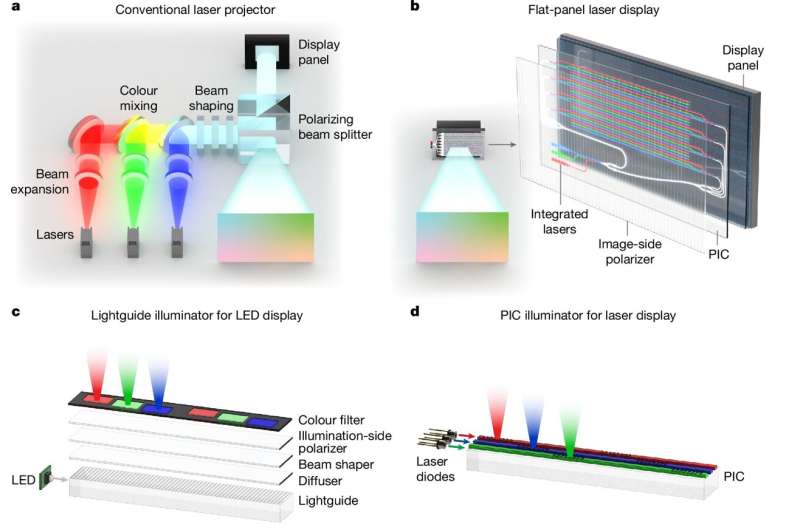
Meta has unveiled a new flat, ultra-thin laser display just two millimeters thick—an innovation that could transform augmented reality (AR) glasses and boost picture quality in everyday devices like smartphones, tablets, and televisions. Published in Nature, the research outlines a system that produces bright, high-resolution images while eliminating many of the bulky components that have long held back laser-based display technologies.
Flat-panel displays powered by LEDs dominate modern electronics, but the quest for thinner, lighter, and more energy-efficient screens continues. Lasers offer tantalizing advantages: higher brightness, compact design, and potential energy savings. Yet traditional laser displays depend on large, complex optical systems, making them too cumbersome and impractical for mass production.
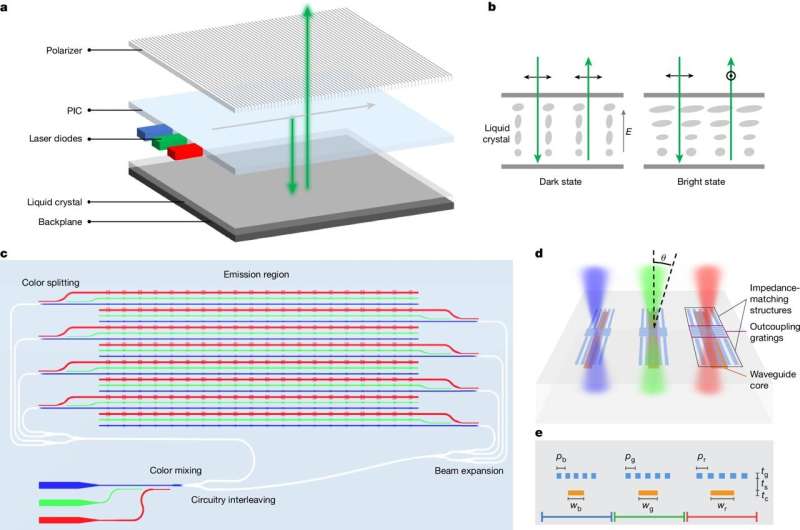
Meta’s breakthrough hinges on a photonic integrated circuit—a chip just a centimeter across that packs thousands of tiny optical components. When paired with a 5×5 mm liquid-crystal-on-silicon (LCoS) panel, the result is a device 80 times thinner than conventional LCoS displays and capable of producing a much wider color gamut. In essence, Meta has shrunk a room’s worth of optical hardware onto a fingernail-sized chip.
The researchers, who spent three years developing the display, say it opens the door to next-generation applications, including slim holographic panels and high-performance immersive systems. A prototype AR headset demonstrated how virtual images could seamlessly overlay office environments—hinting at lightweight, stylish AR glasses that blend digital content with real-world surroundings.
Despite its promise, the technology isn’t without flaws. Laser speckle—grainy visual noise—still mars image quality, and the display currently turns all light on or off at once rather than pixel by pixel. This inefficiency wastes energy when only part of the screen needs to be active, such as when displaying text or simple icons.
Still, the significance is clear. By merging nanophotonics with display engineering, Meta has taken a step closer to ultra-thin, energy-efficient panels that could change how we interact with digital devices. If engineers can overcome the remaining hurdles, the future of screens—from AR glasses to televisions—may look slimmer, brighter, and far more immersive.