

A new wearable electronics system converts nearby robot movement into spatial audio cues, helping workers detect direction, distance and collision risks without constantly watching automated machines in shared environments.
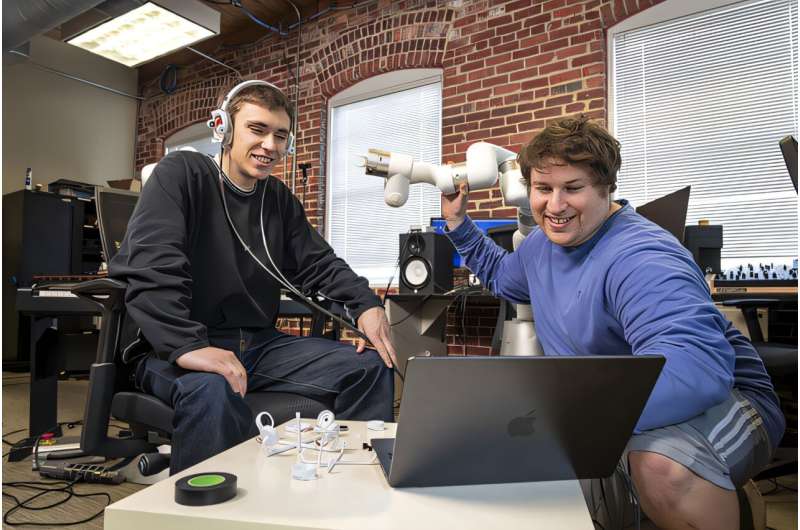
Researchers at Georgia Institute of Technology have developed a wearable electronics system that transforms the movements of nearby robots into real-time musical cues, offering a new approach to improving human awareness and safety in collaborative workspaces. Instead of relying on flashing lights or warning alarms, the technology uses spatial audio to communicate where a robot is, how fast it is moving and whether it poses a potential hazard.
The system, called Spherephones, was inspired by the way suspenseful soundtracks in horror movies alert viewers to unseen danger. Researchers adapted that concept into a wearable interface that continuously generates computer-created lo-fi music, enabling users to perceive robotic motion without needing to maintain constant visual contact. Different sound characteristics represent a robot’s direction, distance and level of risk, allowing workers to stay focused on their primary tasks while remaining aware of nearby machine activity.
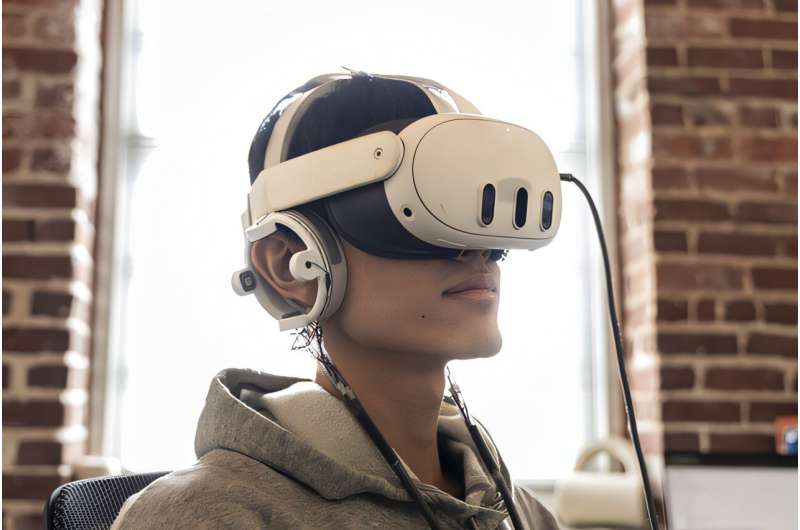
Unlike conventional industrial warning systems that depend on visual indicators or loud alarms, Spherephones creates a continuous auditory layer rather than interrupting the user. The wearable employs spatial audio processing so sounds appear to originate from the robot’s actual position. As the robot changes location, the perceived audio source shifts accordingly, providing intuitive positional awareness. The music also varies based on the robot’s movement speed and proximity, helping users distinguish between routine operations and situations requiring greater attention.
Early user evaluations suggest the approach allows people to accurately anticipate when and from which direction a robot is approaching while continuing manual work. This could reduce the need for workers to repeatedly look away from assembly or inspection tasks, potentially improving both productivity and workplace safety in factories where humans and autonomous robots operate side by side.
Beyond industrial automation, the researchers see broader applications for the wearable electronics platform. The same audio-based interaction could support virtual and augmented reality experiences by making digital objects perceptible through sound. It may also assist visually impaired users with navigation, provide richer environmental awareness for autonomous systems, and even support therapeutic applications such as reducing anxiety or assisting people with post-traumatic stress disorder. The work highlights how wearable electronics combined with intelligent spatial audio could become a practical human-machine communication interface as robots become increasingly common in everyday environments.