Researchers from the Shenzhen Institute of Advanced Technology, the National University of Singapore, and Tsinghua University have developed a 5mm diameter and 0.2mm thickness swallowable X-ray dosimeter.
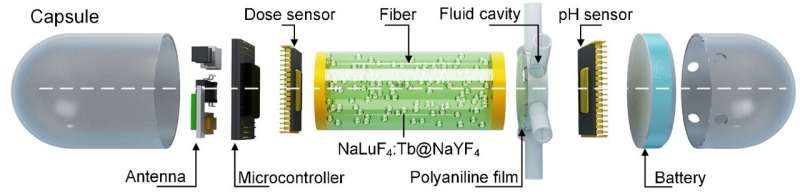
Precise targeting of tumor tissue while avoiding damage to healthy tissue is critical in radiotherapy. Real-time monitoring of radiation dose delivery and absorption is challenging, especially in the gastrointestinal tract. Current methods for monitoring pH and temperature are insufficient for a complete evaluation of radiotherapy.
A joint research team from the Shenzhen Institute of Advanced Technology (SIAT) of the Chinese Academy of Sciences, the National University of Singapore (NUS), and Tsinghua University have developed a 5mm diameter and 0.2mm thickness swallowable X-ray dosimeter that estimates radiation dose using radioluminescence and temperature with a neural network-based regression model.
The researchers found that the Dosimeter was approximately five times more accurate than conventional methods. Clinical dosimeters like metal-oxide-semiconductor field-effect transistors, thermoluminescence sensors, and optically excited films are typically positioned on or near the patient’s skin to estimate the absorbed dose in the target region during in vivo procedures. Electronic portal imaging devices for in vivo dosimetry have been investigated for treatment verification but are expensive and vulnerable to photon attenuation, which may modify the patient’s dose.
The capsule dosimeter comprises a flexible optical fiber containing persistent X-ray nanoscintillators, a polyaniline film, and a wireless miniaturized luminescence readout system. It is capable of measuring pH and temperature. It can assess the absorbed dose during gastric cancer radiotherapy and potentially monitor treatment for other malignancies with size optimization.
The researchers suggested that the capsule could be used for real-time measurement of the absorbed dose in nasopharyngeal carcinoma, or placed in the rectum for prostate cancer brachytherapy, to minimize radiation damage to surrounding structures.
Reference : Bo Hou et al, A swallowable X-ray dosimeter for the real-time monitoring of radiotherapy, Nature Biomedical Engineering (2023). DOI: 10.1038/s41551-023-01024-2