With 95% accuracy and zero visual input, WhoFi pushes the boundaries of biometric tech — and sparks fresh privacy concerns.
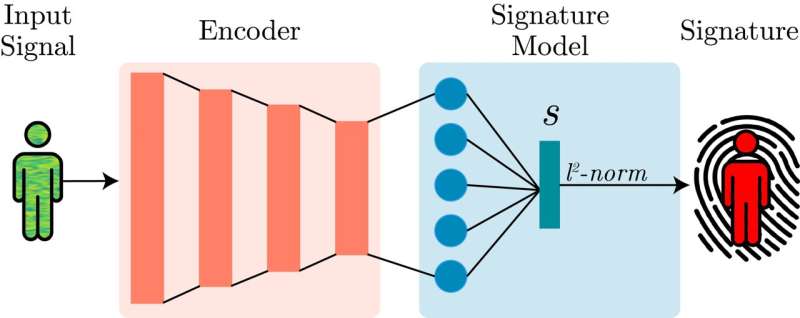
Meet WhoFi — the newest breakthrough in surveillance tech that doesn’t watch you… it senses you. Developed by researchers at La Sapienza University in Rome, this system can identify individuals by the way their body subtly disrupts Wi-Fi signals. Unlike facial recognition or fingerprint scans, WhoFi requires no cameras, no consent, and no physical contact. If there’s a Wi-Fi network around, you’re already part of the system.
WhoFi builds on a technique called Channel State Information (CSI) — essentially how Wi-Fi waves get distorted as they bounce around people and objects. These signal disturbances, it turns out, carry unique biometric fingerprints. The researchers trained a deep neural network to detect and classify these micro-interruptions with 95.5% accuracy. That means it can tell individuals apart based on how they move through the airwaves, even in different locations.
It’s a giant leap from their earlier project EyeFi, and unlike traditional CCTV or biometric tools, WhoFi can work in the dark, behind walls, and in cluttered or smoke-filled environments. It’s discreet, passive, and always on — making it a powerful tool for smart surveillance systems of the future.
But here’s the dilemma: while WhoFi could boost public safety, it opens a Pandora’s box for privacy. You could be tracked without ever knowing it — no cameras, no pings, just your silent Wi-Fi shadow following you around. Although the researchers stress that their system doesn’t capture names, faces, or personal data, it still tracks movement and patterns that can reveal a lot.Currently, WhoFi remains an academic prototype, with no commercial deployment planned — yet. But the implications are huge. In an age where every device is Wi-Fi-enabled, the walls really might have ears. Or at least, signals that know your every move.