




Meta’s new AI-powered wristband reads your muscle signals and turns subtle intentions into real-time digital actions — opening doors to hands-free tech for all, including people with paralysis.
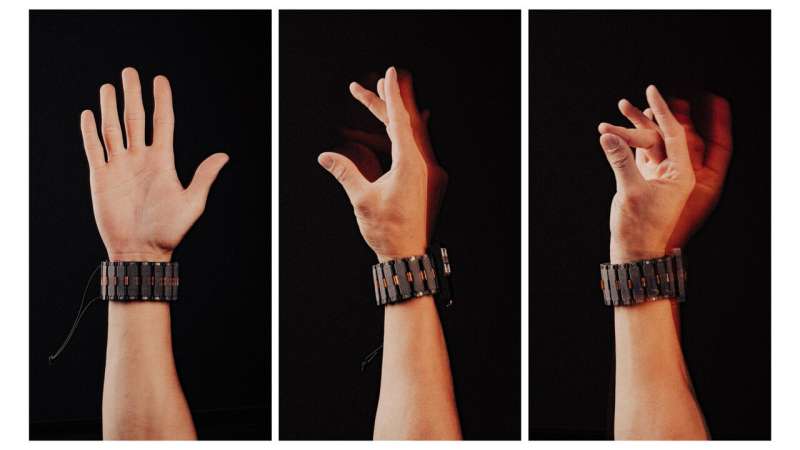
Imagine typing in the air, scrolling a webpage with a twitch of your finger, or launching an app without touching a screen. Meta’s latest wristband prototype is turning this sci-fi dream into reality. Developed by Reality Labs and detailed in Nature, the device taps into surface electromyography (sEMG) to read electrical signals from your brain to your wrist — before your hand even moves.
Unlike traditional gesture control systems that need days of training or motion capture, Meta’s innovation uses AI trained on data from thousands of users. The result? It adapts instantly to new wearers, identifying and translating subtle neuromuscular signals into real-time device commands. You don’t need to wave your hand — even the intention to move a finger is enough.In tests, users could “air write” at speeds of 20.9 words per minute.
While the possibilities for gamers, tech lovers, and AR/VR users are immense, Meta’s real game-changer is in accessibility. The team is working with Carnegie Mellon to explore how people with spinal cord injuries or full hand paralysis could use the wristband. Because it doesn’t need visible movement, the system could give back digital agency to those who’ve lost physical control.
And unlike invasive brain-chip tech like Neuralink, Meta’s wristband is non-invasive, comfortable, and could hit the market in just a few years.This isn’t just the next evolution of user interface — it’s a potential leap for inclusivity, productivity, and immersive computing. With Meta’s wristband, your hand doesn’t need to move. Your intention is enough.


