The power converter and EMI filter support 28V systems, work with many designs, reduce size and weight, and help speed up system development.
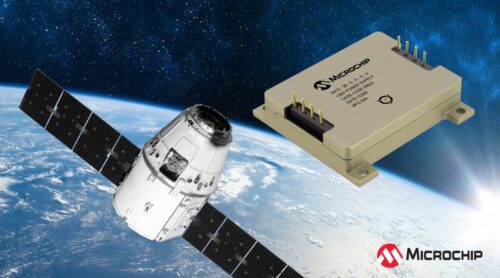
Microchip Technology has introduced two space power components: the SA15-28 radiation-hardened 15W DC-DC power converter and the SF100-28 EMI noise suppression filter. Both meet MIL-STD-461 electromagnetic compatibility standards and operate from a 28V satellite bus, making them suitable for space use.
The power converter is an isolated converter with triple 5V outputs, used for powering point-of-load converters and LDO regulators that support FPGAs and microprocessors. It comes in a 1.68 in³ package and weighs 60 grams. It also supports custom output voltage configurations.
The SF100-28 EMI filter supports output power up to 100W and works with Microchip’s SA15-28, SA50 series converters, and SF200 filters. This allows integration across Microchip power systems.
These components are offered as off-the-shelf devices, allowing users to speed up development without waiting for custom designs or space qualifications. For other applications, Microchip offers upgrade paths—from Commercial-Off-The-Shelf (COTS) to space-qualified, or from Radiation-Hardened By Design (RHBD) to sub-QML ceramic or plastic packaging.
The SA15-28’s size and weight help reduce Size, Weight, and Power (SWaP), a key factor in satellite systems. Its triple output supports multiple subsystems from one converter.
The SF100-28’s compatibility with more Microchip converters allows modular system design. This helps reuse and simplifies changes when scaling across mission types.
With these releases, space system developers can shorten design cycles, reduce risk, and increase system reliability from early tests to deployment.
The ability to start with COTS and move to hardened or qualified levels gives teams flexibility to adjust to mission needs and funding without changing the system base.
“Microchip’s space-grade portfolio with the new SA15-28 power converter and SF100-28 EMI filter allows our customers to customize and scale their space power systems to meet the specifications of their application,” said Leon Gross, corporate vice president of Microchip’s high-reliability and RF business unit. “The non-hybrid or discrete component-based construction is specifically designed to enable flexibility and faster time to market.”