In EFY’s Women Power Series, Garima Bharadwaj of Enlite Research discusses resilience, overcoming bias, building scalable technology, and advocating equal opportunities for women leaders in conversation with Nitisha Dubey.
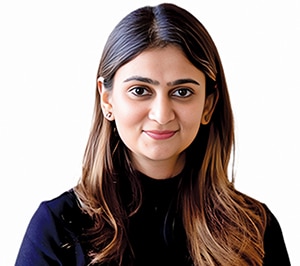
Q. What inspired you to start your journey, and what was the defining moment that made you take the leap?
A. My journey began with early exposure to real estate at OYO, which gave me a practical understanding of how the industry operates. What struck me was that this sector had not seen meaningful innovation in decades. The defining moment was recognising that the gap was structural rather than incremental. There was no viable solution, so the only path forward was to create a category. Being part of two high-growth startups before this shaped how I think about building from first principles. Entrepreneurship became a natural progression, not to start a company for its own sake, but because the technology that should have existed simply did not.
Q. What were the biggest challenges you faced as a woman, and how did you overcome them?
A. The two industries I chose to operate in, technology and real estate, have historically had very few women. As a result, the environment was not always accustomed to women in the roles I was stepping into. The challenges were not overt, but preconceived notions were present. People sometimes arrived with assumptions before the conversation even began. What helped was staying focused on depth and substance. In deep technology, credibility is built through rigour and real-world performance. Once systems work reliably at scale, the conversation shifts from who built them to how well they work. Preparation and consistent execution were my response to any bias, perceived or real.
Q. Did you face bias from others or self-doubt because of your gender?
A. Preconceived notions exist, and I will not pretend otherwise. There are moments early on when you sense that you are being measured against a different standard. I chose not to internalise that and instead focused on the work. It is also important to acknowledge that self-doubt is something many women experience, even when they are more than capable. Whether it is waiting to start, waiting to execute, or waiting to approach a fund, there is often an instinct to seek one more opinion before moving forward. That pattern is worth recognising and breaking. Confidence is not the absence of doubt. It is choosing to act anyway and letting your results define the narrative.
Q. Can you share a failure or setback that became a turning point in your growth?
A. This entrepreneurial journey has not been easy. We chose to build technology the hard way, developing every moving component internally rather than stitching together existing solutions. In the early years, what we had was not quite a product yet. It was closer to a solution in progress. That phase stretched across three to four years before we arrived at something truly productised. There were moments of real doubt and significant iteration. However, that process forced a level of engineering discipline and architectural thinking that shortcuts could never produce. The difficulty of that path became the foundation of our durability, and I would not change it.
Q. How did your family or support system influence your journey, and how did you balance responsibilities?
A. I feel genuinely privileged to have the support system that I do. Having a family that believes in you, understands the demands of what you are building, and stands behind your choices is not something every entrepreneur experiences, and I do not take it lightly. That foundation creates a kind of mental freedom that is difficult to quantify but deeply felt. It allows you to take risks with clarity rather than anxiety. I also believe in work-life equilibrium rather than in the traditional sense of balance. There are seasons where work demands intensity and others where family takes precedence. Being intentional about those shifts and having a support system that genuinely understands them makes the entire journey both possible and meaningful.
Q. What keeps you motivated during tough times, and what belief has guided you throughout your journey?
A. I believe in discipline over motivation. Motivation fluctuates, but discipline shows up regardless of how you feel on a given day. What keeps me grounded is the commitment to improve every day. That consistency compounds over time. The belief that has guided me is that self-confidence is foundational. Not arrogance, but a quiet conviction in the value of what you are building and your ability to see it through. Tough phases are inevitable when you are creating something that did not exist before. Returning to first principles and trusting the depth of your work is what carries you through those periods.
Q. Have you introduced any changes in your organisation as a leader?
A. My approach has been to build a culture rooted in merit, ownership, and open dialogue. We encourage questioning and independent thinking, regardless of hierarchy. People are given responsibility early and are expected to defend their ideas with logic and data. Inclusion, in my view, is not about symbolic gestures. It is about ensuring that capability is visible and rewarded. When teammates feel their work matters and their voice is heard, diversity strengthens naturally. We have focused on building an environment where growth is earned through contribution rather than position.
Q. What common mistakes should aspiring women entrepreneurs avoid, and what would you do differently if starting today?
A. One common mistake is waiting for perfect readiness. Entrepreneurship rarely offers perfect clarity. Conviction develops through action. Another mistake is focusing on perception rather than product depth. In technology, long-term credibility comes from engineering strength. If I were starting today, I would invest earlier in global exposure and ecosystem engagement. Building networks beyond immediate geography accelerates perspective and opportunity. The fundamentals, however, would remain the same: choose a real problem, build deeply, and stay consistent.
Q. How is the ecosystem evolving for women leaders, and what message would you give to the next generation?
A. The ecosystem today offers more visibility, mentorship, and access to capital than it did a decade ago. There is also a gradual normalisation of women in leadership roles, which is encouraging. My message to the next generation is to focus on competence. Build strong technical or domain depth. Choose substance over visibility. Leadership is not about fitting a mould. It is about creating value consistently. When that happens, opportunities expand naturally.
Q. What are three things society can undertake to make it easier for future women leaders to rise?
A. First, normalise ambition equally across genders. Ambition should not require justification.
Second, evaluate performance through outcomes and contributions rather than assumptions.
Third, treat leadership and responsibility at home and at work as shared commitments. When support structures are balanced, more individuals can pursue demanding paths without compromise. Progress does not come from special treatment. It comes from fair expectations and equal opportunity.