



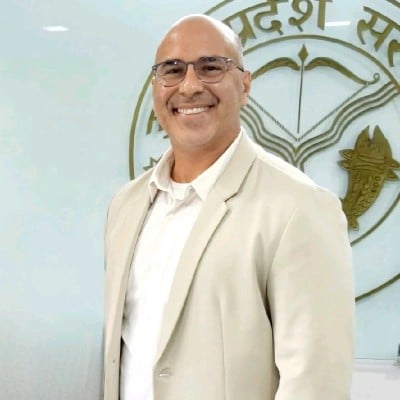
From advanced packaging and RISC-V to AI-driven manufacturing and startup-led innovation, Sharat Kaul of the International Electronics Manufacturing Initiative (INEMI) outlines India’s semiconductor opportunities and challenges in an exclusive interaction with EFY’s Akanksha Sondhi Gaur.
Q: International Electronics Manufacturing Initiative (INEMI) is globally known for roadmaps. What role is INEMI playing in India today?
A: We are acting primarily as a catalyst. Rather than replicating existing ecosystems, our goal is to identify areas where India can leapfrog and create differentiation. To that end, we established working groups and focused on high-potential domains. Within months of launching activities in India, we conducted roadshows and formed three major advanced packaging groups, with a fourth now under development.
Q: What are the most exciting initiatives currently happening at INEMI India?
A: We have launched three focused advanced packaging programmes. The first, at the Indian Institute of Science (IISc), began with electric vehicle (EV) displays and has expanded to smartphone and smart television (TV) displays, larger panels, films, adhesives, materials, testing, and wafer-level packaging. The second, at Indian Institute of Technology (IIT) Madras, focuses on integrated power modules using high-voltage insulated-gate bipolar transistors (IGBTs) and metal-oxide-semiconductor field-effect transistors (MOSFETs), covering substrates, advanced packaging, and power electronics fabrication. The third, at the Indian Institute of Technology (IIT) Bombay, is developing glass substrates and electroplating technologies for future radio frequency (RF) systems, large-panel packaging, thermal management, and data-centre architectures.
A fourth programme is being launched around wireless technologies, including Bluetooth, Wi-Fi, wearables, RF systems, antennas, and healthcare applications. By 2027, these initiatives are expected to deliver integrated power module prototypes, wafer-level packaging implementations, and glass-based prototypes.
Q: How do you ensure these initiatives translate into technology deployment rather than becoming discussion platforms?
A: INEMI focuses on measurable technology readiness levels (TRLs) and execution. The objective is to move technologies from lower TRLs into prototypes, testing, certification, and eventually manufacturing. Programmes involving wafer-level packaging, integrated power modules, and glass substrates are already progressing in laboratories and pilot environments, while collaborations with certification bodies and industry partners are accelerating progress toward high-volume production.
Q: What shifted your focus from semiconductor manufacturing to ecosystem coordination in India?
A: India’s challenge has never been execution capability but achieving relevance in semiconductors. Early ambitions through Semi-Conductor Laboratory (SCL) and fabrication efforts were set back by issues such as the lithography incident in the 1980s, delaying progress by decades. Meanwhile, India’s strengths grew in semiconductor design, electronics manufacturing services, assembly, and automotive systems. The challenge now is connecting this strong electronics base with semiconductor manufacturing. Semiconductors have become a national imperative and an opportunity for India to participate across the entire value chain.
Q: What bottlenecks highlighted the need for a system-level approach in India?
A: India has built a world-class semiconductor design workforce of nearly 150,000 engineers through multinational research and development (R&D) centres. However, product ownership and strategic control largely remain overseas. Manufacturing introduces additional complexities involving ultra-high-purity materials, rare-earth processing, equipment, testing, simulation, and process technologies.
To address this, INEMI developed a framework identifying short-, medium-, and long-term opportunities. It highlighted India’s strengths in modelling, simulation, design, reliability analysis, and material science. The next step is converting those strengths into indigenous products and innovation.
Q: Where are India’s biggest gaps today?
A: The largest gaps are in materials, equipment manufacturing, and semiconductor-grade process technologies. Ironically, India already designs and models equipment for global companies, but manufacturing occurs elsewhere. Dependence on imported electronic design automation (EDA) software and semiconductor equipment is likely to continue for another decade or two.
That is why open ecosystems are important. We are actively studying open source EDA flows, signoff tools, process design kits (PDKs), and IP ecosystems. Government initiatives such as Shakti Core and OpenROAD implementations at SCL are creating opportunities to reduce long-term dependence. Materials may ultimately be the hardest challenge because the underlying process recipes and know-how remain tightly guarded worldwide.
Q: How can India avoid remaining only a design-services or packaging hub and move toward complete product ownership?
A: India’s semiconductor growth has largely been service-led, with talent supporting products owned by global companies. The next phase requires ownership of intellectual property (IP), products, and platforms. That means building indigenous demand in sectors such as agriculture, healthcare, mobility, defence, and industrial electronics, while strengthening capabilities across design, manufacturing, packaging, and systems integration. Product ownership ultimately drives greater value capture and long-term ecosystem sustainability.
Q: You frequently talk about ‘mini ecosystems.’ What does that mean?
A: Semiconductor talent cannot be developed through classroom teaching alone. Mini ecosystems are emerging around universities through clean rooms, Surface-Mount Technology (SMT) lines, reliability labs, and industry-academia collaboration. Institutions such as IIT Madras, IIT Kanpur, Shastra University, and Deendayal University are giving students hands-on experience in manufacturing, testing, and validation. Some programmes are already achieving near-full placement rates and significantly improving economic opportunities. The broader vision is a semiconductor “diamond” ecosystem spanning north, south, east, and west India.
Q: What role should defence play in India’s ecosystem?
A: Historically, many semiconductor breakthroughs originated from defence-led investments before finding commercial applications. India can follow a similar model by strengthening links between defence R&D, academia, and industry. Technologies developed for artificial intelligence (AI), sensors, imaging, communication systems, and RF technologies could later transition into commercial products, creating both strategic and economic advantages.
Q: What unique advantage does India have when competing against larger semiconductor economies?
A: India’s advantage lies in frugal engineering and the ability to learn from mature ecosystems. Rather than recreating decades of infrastructure sequentially, India can focus on leapfrog opportunities. Areas such as advanced packaging, AI-enabled manufacturing, power electronics, and specialised semiconductor systems offer the potential for faster progress with lower capital intensity.
Q: You often describe advanced packaging as India’s ‘golden opportunity.’ Why?
A: Advanced packaging is India’s golden moment to become relevant in semiconductors. The industry is shifting from a sole focus on leading-edge nodes toward system-level integration. Packaging is no longer a back-end activity; it has become a major innovation layer. Technologies such as heterogeneous integration, chiplets, wafer-level packaging, 2.5D integration, and 3D stacking are reshaping semiconductor design.
India already has strengths in design, automotive manufacturing, assembly, and electronics. Advanced packaging connects these capabilities while requiring lower investment and shorter learning cycles than leading-edge fabrication facilities (fabs). It provides a practical pathway for India to achieve global relevance without dominating cutting-edge fabrication.
Q: What kind of semiconductor workforce will India need over the next decade?
A: The industry will require far more than PhDs and chip designers. It will also need technicians, operators, manufacturing engineers, reliability specialists, packaging experts, and equipment engineers. Educational institutions are increasingly combining theory with practical training through clean rooms, SMT lines, reliability labs, and industry partnerships. Building talent across all levels will be critical for scaling the ecosystem.
Q: How will chiplets change semiconductor economics?
A: Chiplets replace large monolithic dies with specialised building blocks for AI acceleration, memory, communications, and power management, integrated within a single package. This creates greater modularity and design flexibility.
Over time, the distinction between printed circuit boards (PCBs) and chips is expected to blur as digital, power, RF, and memory functions are integrated into heterogeneous packages. However, significant challenges remain in managing thermal effects, interference, and integrating devices operating at very different voltages, temperatures, and frequencies.
Q: What is happening around RISC-V, and why does it matter strategically?
A: RISC-V is emerging as a strategic requirement for technological sovereignty. Most processor ecosystems today depend on imported architectures, whereas open architectures provide greater ownership and control.
India has already launched initiatives such as the Shakti Processor Programme and VEGA Processor Programme, alongside startups developing indigenous RISC-V solutions, some of which are already shipping products. Combined with open-source EDA tools, RISC-V enables students and companies to design, fabricate, package, validate, and build complete systems. The long-term goal is an end-to-end Indian ecosystem spanning design, silicon, packaging, and finished products.
Q: Beyond sovereignty, where could Indian RISC-V products first see meaningful commercial adoption?
A: Early adoption is likely in smart meters, Internet of Things (IoT) devices, industrial automation, wearables, drones, healthcare systems, and edge-computing platforms. These markets require flexibility and relatively lower complexity, making them well suited for indigenous architectures.
Q: Many countries are adopting RISC-V. Why could India’s opportunity be different?
A: India’s opportunity extends beyond adopting an instruction-set architecture. Unlike countries that built vertically integrated semiconductor industries over decades, India starts with strong design talent, software expertise, growing electronics manufacturing, and an expanding startup ecosystem.
Because the RISC-V ecosystem is still evolving, India has an opportunity not only to build processors but also to contribute tools, IP blocks, software stacks, security frameworks, packaging technologies, and complete system solutions. The greatest value may come from owning key parts of the ecosystem rather than simply using the technology.
Q: What could be the biggest mistake India makes while building a RISC-V ecosystem?
A: Treating RISC-V purely as a processor-design exercise. Real value comes when software tools, compilers, operating systems, validation environments, security frameworks, packaging technologies, manufacturing pathways, and applications evolve together. If development occurs in silos, India risks repeating its historical pattern of strong engineering services without corresponding product ownership.
Q: Could RISC-V create a startup opportunity similar to what Android created for the mobile ecosystem?
A: There are parallels. Android created opportunities not only for operating systems but also for application developers, hardware companies, device makers, and service providers. RISC-V could have a similar multiplier effect.
Startups may focus on AI accelerators, domain-specific IP, security modules, automotive solutions, healthcare platforms, development tools, or specialised semiconductor systems. By lowering barriers to entry, RISC-V enables smaller companies and students to participate in semiconductor innovation in ways that previously required far larger investments.
Q: How important will AI-driven manufacturing become?
A: India already contributes to global semiconductor ecosystems through digital twins, yield optimisation, design for excellence (DFX) methodologies, and AI-driven manufacturing, while building strong expertise in analytics and optimisation. Manufacturing is increasingly moving toward Industry 4.0, robotics, dark manufacturing, and lights-out factories.
Emerging opportunities include liquid immersion cooling, lower-power architectures, 400V and 800V semiconductor systems, and data-centre hardware. The challenge is not manufacturing capability itself; India already produces motherboards, PCBs, and complex electronic assemblies, but increasing indigenous semiconductor content and technology ownership.
Q: What startup opportunities excite you the most?
A: The challenge is no longer creating startups but helping them move beyond services into product ownership. Promising opportunities include advanced packaging materials, semiconductor equipment, RISC-V ecosystems, power electronics, RF technologies, healthcare electronics, AI hardware, wearables, glass substrates, semiconductor software tools, and data-centre technologies. The next phase of growth requires building complete end-to-end products tailored to India’s needs in agriculture, healthcare, mobility, defence, and infrastructure.
Q: India’s semiconductor growth currently relies heavily on incentives. What happens once subsidies taper off?
A: Incentives can create momentum, but long-term success depends on profitable products, strong customers, high yields, and competitive technologies. The real test is whether companies remain commercially viable once government support declines. Sustainable growth will ultimately be driven by market demand and execution excellence.
Q: Looking ahead, what does success look like for India?
A: Success is not defined by building a single fabrication facility. It means creating indigenous IP, globally competitive startups, manufacturing relevance, leadership in advanced packaging, strong research ecosystems, and successful Indian product companies. India must establish relevance across multiple layers of the semiconductor value chain. The industry is approaching a critical inflection point, and advanced packaging could become its defining opportunity.

