As electronics are integral to defence and aerospace, custom solutions remain the most crucial aspect, says Mukesh Kumar Rao of Zosh Aerospace. He discusses how their innovative systems, ranging from test equipment to sensor fusion and map engines, are transforming the sector, with EFY’s Nidhi Agarwal.
Q. Why did you decide to begin a startup? Any story to share?
A. Like many people from northern India, my initial goal was to secure a government job. In 2010, I joined Bharat Electronics Limited (BEL), with no plans to resign or start a company.

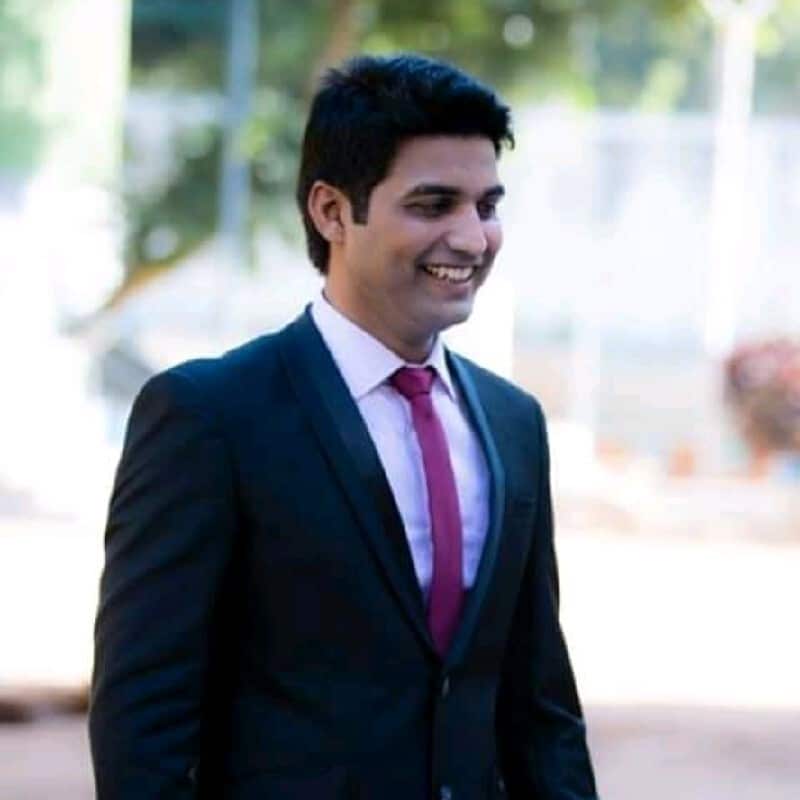
During COVID-19, immediately after the first lockdown in March 2020, BEL was tasked with producing 30,000 ventilators. A core team of 50 people was formed, and selected members worked through the lockdown; I was the youngest member of this team. BEL had no prior experience in ventilator design or manufacturing. Yet, the team handled everything, from design and development to manufacturing, testing, and hospital deployment, and completed the project in about three months by mid-July that year.
This experience led to the realisation that talent and time were underutilised in a government role, and that building something independently was worth attempting. I left BEL and started the company in 2021.
Q. What does your company do?
A. We work in defence and aerospace electronics, including software development. Our work includes designing test systems for aircraft avionics, developing software for surveillance and command-and-control systems, and building solutions around fibre-optic sensing and sensor data fusion.
We integrate inputs from sensors such as radar, electro-optical cameras, automatic identification system (AIS), global positioning system (GPS), and automatic dependent surveillance–broadcast (ADS-B) to generate actionable information for defence applications.
Q. Are you only making software, or do you also build hardware products?
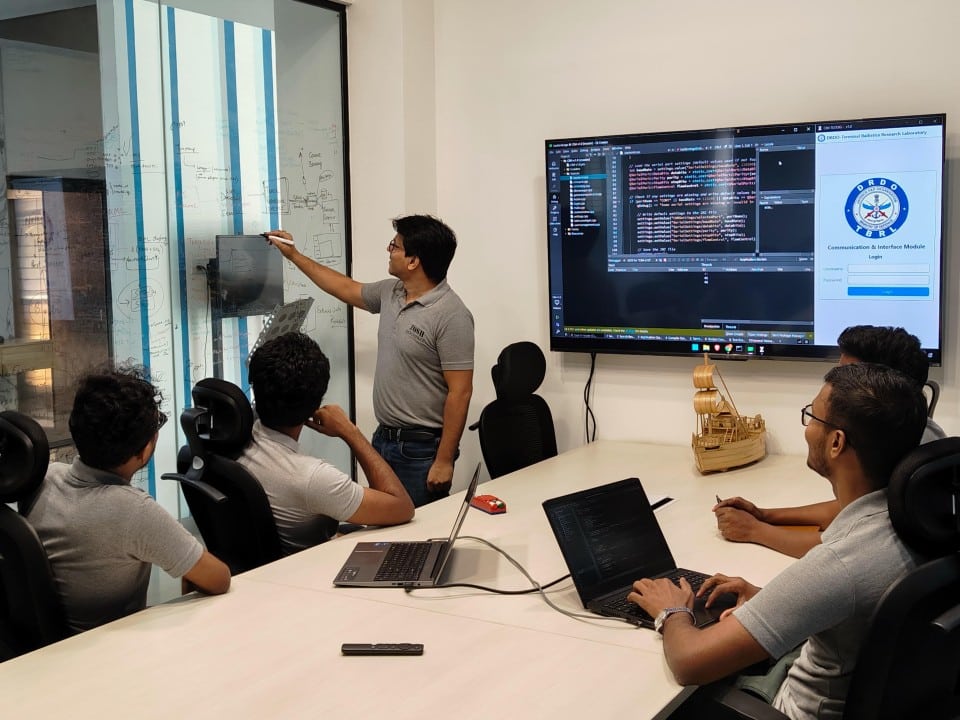
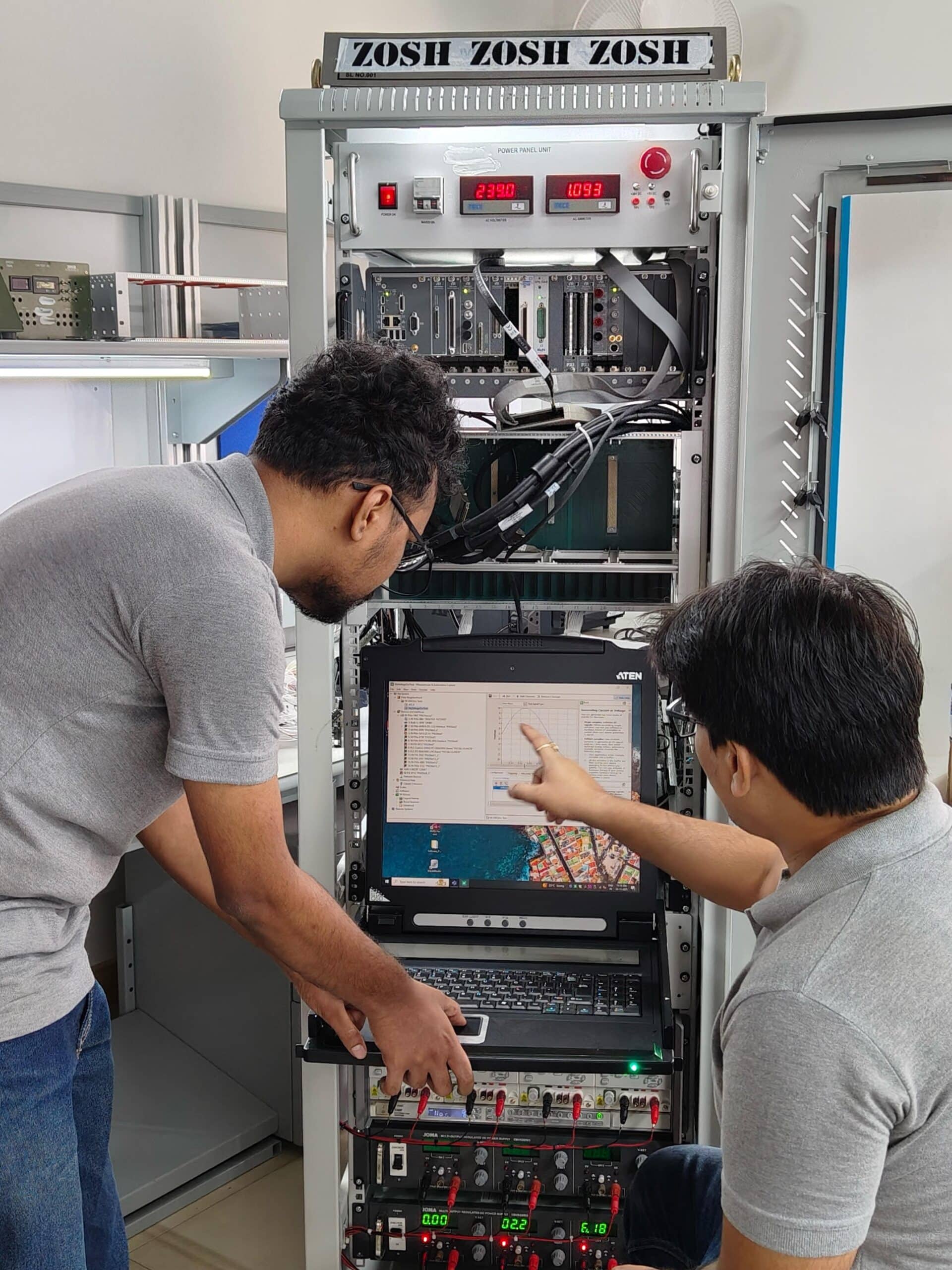
A. We develop both software and hardware, as defence electronics demand custom solutions. For example, we have built more than 10 testers for various line replaceable units (LRUs) used in an indigenous aircraft programme. When a customer provides the test procedure for a specific LRU, we design a fully automated test system, including customised electronic hardware and the associated software, based on the customer’s specifications.
Q. Do you have your own products, or do you only develop solutions for clients?
A. We have our own products as well as customised solutions. One key product is our map engine. While it is a general platform, it is designed to meet specialised defence and aerospace requirements.
Off-the-shelf maps are subscription-based and unsuitable for defence systems. Our map engine acts as a background system on which customers can overlay assets or operational data; for example, tracking ships in a command-and-control system or identifying locations in radar stations and coastal monitoring systems. Since it is developed in-house, it can be fully customised.
Q. Who are your target customers?
A. Indian defence is our largest customer segment. We work extensively with public sector undertakings (PSUs) such as BEL, Defence Research and Development Organisation (DRDO) labs, private defence companies like Tata Advanced Systems and Larsen & Toubro (L&T), and various ordnance factories.
Q. How do your hardware and software products come together, and why is this integration important?
A. One of our key domains is test systems for defence electronics. For instance, when an aircraft LRU is developed, it requires a test system. Manual testing can take months, whereas an automated test system can reduce this to two to four hours.
Alongside core defence electronics, there are auxiliary but critical requirements like these, and we focus on addressing them while also developing advanced technologies not yet widely available in India. One such area is fibre-optic sensors for structural health monitoring of aircraft bodies, bridges, flyovers, railways, and other infrastructure. These sensors are currently in the research and development (R&D) stage and may take six months to a year to reach product maturity.
Q. What hardware is used in your testing systems?
A. All hardware is fully customised to the application. There is no standard hardware suitable for all products. Similar to aircraft development, components such as mission computers, air data recorders, and other electronic LRUs are tailored to specific aircraft programmes, and our test systems follow the same philosophy.
Q. Can you explain the architecture of your sensor fusion platform?
A. The system acquires data from sensors such as radar, electro-optic cameras, and thermal cameras, using different protocols like automatic radar plotting aid (ARPA) or proprietary formats. The software processes this data and presents it through a graphical user interface. At the core of the architecture are our custom map and chart engines, which handle data integration and visualisation.
Q. How does your software work with radar and AIS data?
A. The software functions as a layered map engine with a base world map and hundreds or even thousands of overlay layers. Each layer represents a specific data source, such as radar-detected ships or AIS tracks.
Radar target data, including latitude, longitude, and target size, is displayed as ship icons at corresponding positions. AIS track data, mandatory for ships over 300 tonnes under International Lighthouse Authority (ILA) guidelines, is shown as a separate layer. Users can customise visualisation, such as highlighting Indian ships with specific colours.
The software works with most commercial off-the-shelf (COTS) radar and AIS equipment and includes additional background features beyond basic tracking.
Q. Why did you develop hardware alongside software when hardware solutions already exist?
A. For ship-monitoring products, we do not develop hardware; we use existing COTS hardware and integrate it with our software. Hardware development applies specifically to our aircraft test systems, where both hardware and software must be customised to meet stringent requirements.
Q. Do you also have augmented reality/virtual reality (AR/VR)-based simulators?
A. We explored AR/VR-based training simulators, particularly after increased industry attention following Meta and Microsoft’s initiatives. We believed AR/VR had strong potential in defence training and built demonstrators for customers.
However, most requirements ultimately focused only on procuring VR headsets, with little emphasis on training outcomes or lifecycle value. Many departments set up AR/VR labs but did not deploy them meaningfully. With limited capital, we chose to pause AR/VR development and focus on confirmed requirements with a six-to-twelve-month return horizon. The hardware remains in storage.
Q. Are you using artificial intelligence (AI) or machine learning (ML) in your software?
A. AI and ML are integral to modern software development. A partner company develops AI models for surveillance and command-and-control systems. Some models are complete, while others are still in development. This work happens outside Zosh Aerospace, and the models are applied once sufficient customer data, typically one to two years, is available for training.
Q. What design challenges did you face in hardware-software integration?
A. The main challenge was the need for multidisciplinary expertise. Designing aircraft LRU testers requires knowledge of avionics protocols such as MIL-1553B, ARINC 429, ARINC 818, RS-422, Ethernet, and USB, along with PCB design, material selection, and high-speed hardware design.
Interconnect design adds further complexity, as radio frequency (RF) signals, optical channels, and digital interfaces all require different cabling and termination methods. Our experience in test systems allows us to manage this complexity effectively. The primary constraint remains capital, as the company is bootstrapped, so expansion is carefully prioritised.
Q. How do you validate end-to-end performance, and what changes during mass production?
A. Validation is embedded into the design process through strong quality practices and multiple design reviews. Hardware prototypes are tested early, and before mass production, systems undergo formal qualification, especially for aircraft applications, where external agencies are involved. Strict compliance with standards and documentation ensures production readiness.
Q. You mentioned an optical sensor in the R&D stage. What is it, and how is it different?
A. Conventional sensors use copper wiring to transmit electrical signals, which adds weight, is susceptible to electromagnetic interference (EMI/EMC), and requires separate wiring for each sensor. Fibre-optic sensors use silica glass fibres, which are immune to EMI, lighter, and safer, as no electrical signal is present at the sensing point.
Multiple sensors can be connected in series on a single fibre, significantly simplifying system design. These sensors measure changes in light wavelength caused by parameters such as temperature, humidity, strain, or deflection. The technology is currently in R&D and is expected to be product-ready in about six months.
Q. Do you have your own manufacturing unit?
A. We have our own facility with an electronics assembly line. We are fabless, with in-house design and a network of 50–60 qualified fabrication vendors. Final assembly and quality control are handled internally.
Q. How do you view your competitive position?
A. Competition exists, but it is limited. Our advantage lies in deep technological exposure and ongoing work. While these technologies have existed for over a decade, our focus is on making them deployable at scale, particularly in India.
Q. How is your team structured?
A. The team consists of over 20 people: four in leadership, three in administration and accounts, 10–11 engineers (electronics and software), and four to five operators handling interconnects and assembly tasks.
Q. What was your revenue in FY 2024–25?
A. While exact figures cannot be disclosed, revenue was between 40 and 50 million rupees.
Q. Do you have channel partners or distributors?
A. Currently, no. Our work is customised mainly, making channel partners less relevant. This could change once we have standardised software products.
Q. What are your future growth plans?
A. Our priority is capital acquisition. Profits are reinvested into tools, infrastructure, and team expansion. With adequate capital, growth would accelerate significantly.
Q. What emerging technologies will impact defence and space in the next five to ten years?
A. Quantum computing, quantum radar, photonic radar, and fibre-optic sensing will have a major impact. While adoption will be gradual, these technologies will increasingly be integrated into defence systems alongside existing platforms.