A H-shaped bionic robot mimics a cheetah’s running motion using piezoelectric materials that generate electricity under stress. Read more!
In recent years, roboticists and computer scientists have created various systems inspired by nature, particularly humans and animals. These robots can better navigate real-world environments by mimicking animal movements and behaviours.
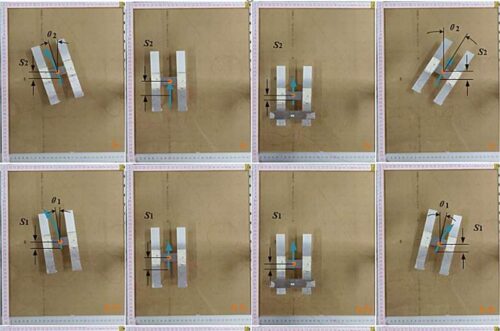
Researchers at Northeastern University in China have developed an H-shaped bionic robot that replicates a cheetah’s running motion. The robot uses piezoelectric materials, which generate an electric charge when mechanically stressed.
The H-shaped bionic piezoelectric robot (H-BPR), developed by Li, Li, and their team, features four legs connected by three piezoelectric beams. It mimics a cheetah’s running gait by using the bending vibrations of these beams to move its legs in a periodic motion.
Unlike other robots that rely on wave motion in piezoelectric materials, this new design is simpler and potentially easier to manufacture. Additionally, its movements and turning radius can be adjusted by modifying the applied voltage, allowing for greater control and flexibility.
The team built a basic prototype of the robot, capable of carrying small loads. Its future design could be modified to include miniature sensors or cameras, expanding its functionality.
They tested the prototype in real-world experiments, which showed promising results. The robot effectively mimicked a cheetah’s running gait and successfully climbed ramps with varying inclinations.
An experimental setup was built to evaluate the robot’s motion efficiency and effectiveness. Performance tests showed that the piezoelectric robot achieved a maximum velocity of 66.79 mm/s at an excitation voltage of 320 V and had a load capacity of 55 g. The H-BPR with unequal drive legs also demonstrated better climbing performance, providing valuable insights for optimizing leg height in piezoelectric robots.
This robotic system could pave the way for similar designs using piezoelectric materials. In the future, the team may enhance the robot to withstand extreme temperatures, harsh climates, and hazardous chemicals, making it more suitable for industrial use and search-and-rescue missions.
Reference: Ying Li et al, Design and Performance Test of an H-shaped Bionic Piezoelectric Robot Based on the Standing Wave Principle, Journal of Bionic Engineering (2025). DOI: 10.1007/s42235-025-00663-2.