






All-frequency 6G chip, packing nine radio systems into a thumbnail-sized device. Capable of 100 Gbps speeds, the innovation paves the way for ultra-fast, full-spectrum wireless networks expected by 2030.
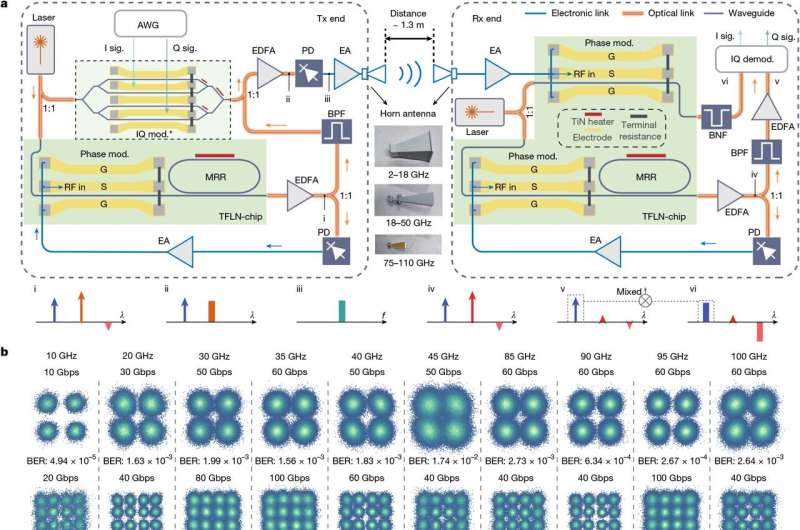
A team of Chinese researchers has developed the world’s first 6G “all-frequency” chip, capable of mobile internet speeds exceeding 100 gigabits per second (Gbps). The breakthrough, achieved by scientists from Peking University and the City University of Hong Kong, could accelerate the arrival of sixth-generation wireless networks, expected to debut commercially around 2030.
The thumbnail-sized chip, measuring just 11 by 1.7 millimeters, can operate across the entire wireless spectrum—from 0.5 GHz to 115 GHz. Traditionally, covering such a wide range would require nine separate radio systems. By unifying these functions into one device, the chip offers a pathway to faster, more versatile, and more efficient wireless communication.
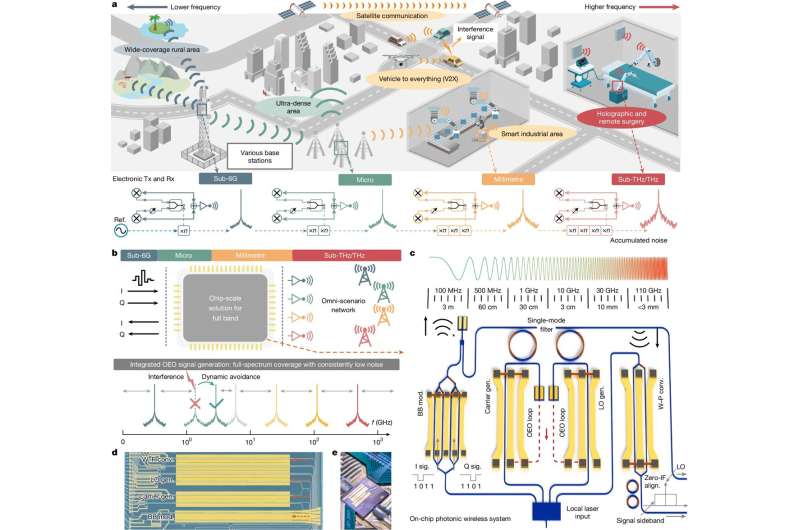
“This marks a step toward full-spectrum, omni-scenario wireless networks,” the researchers wrote in Nature, where the study was published. They reported that the system not only supports broader bandwidth and higher data rates but also improves signal stability compared to previous photonic-assisted wireless systems.
The innovation relies on thin-film lithium niobate (TFLN), which enables multiple wireless system components to be integrated onto a single chip. Using a broadband electro-optic modulator, wireless signals are first converted into optical ones and then processed by optoelectronic oscillators, which generate stable radio frequencies across microwave and terahertz bands. The design allows for frequency tuning within 180 microseconds—orders of magnitude faster than current technologies.If successful, 6G could transform industries from autonomous systems and telemedicine to immersive virtual experiences, potentially reshaping nearly every aspect of digital life.
6G networks are envisioned to deliver ultra-low latency, AI-driven network optimization, and seamless integration across devices, industries, and smart cities. Unlike 5G, which is limited to select frequency bands, 6G will exploit the entire spectrum, including high-frequency terahertz waves, to achieve unprecedented speeds and capacity. Experts caution that robust infrastructure, global standards, and consumer devices will need to mature before 6G can be deployed. Still, this milestone demonstrates tangible progress toward the ultra-fast, always-connected future that 6G promises.


