

Tired of slow sensors and costly lasers? Discover a way to measure speed, length, and position with precision without touching a thing.
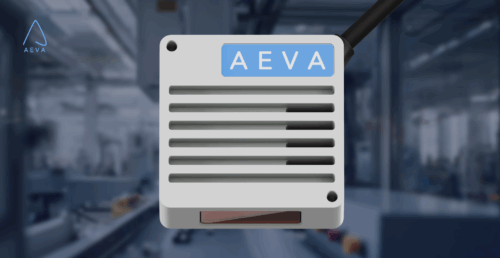
Manufacturers often need accurate measurement of speed, length, and position, but traditional encoders and tactile sensors can be limited by wear, maintenance, and difficulty handling short or start-stop material segments. Aeva Eve 1V solves this problem by providing a high-precision, non-contact motion sensor that delivers accurate, repeatable, and reliable measurements without physically contacting the material.

Eve 1V is designed for a wide range of industrial and manufacturing environments, including packaging and printing, construction materials, and extrusion lines. It can measure continuous materials—such as webs, sheets, and rolls—as well as discrete goods, giving precise data for cutting, quality control, and material handling. By replacing tactile measuring wheels and complex, high-cost laser velocimeters, it provides manufacturers with a more accessible, reliable, and scalable solution for speed measurement.
The sensor uses Aeva’s Frequency Modulated Continuous Wave (FMCW) laser technology to measure lateral velocity, length, movement direction, and position of moving materials. It performs reliably even in challenging conditions, such as start-stop operations or with short material segments, capturing motion data with submillimeter-per-second accuracy. Its non-contact design reduces wear and maintenance, enabling rapid “install-and-go” integration into production lines. Eve 1V is compact, robust, and uses an eye-safe Class 1 laser, combining precision and safety in a single solution.
“With Eve 1V, we’re bringing Aeva’s precision sensing expertise to a whole new class of industrial applications that measure an object’s motion in the manufacturing setting,” said Mina Rezk, Co-founder and CTO at Aeva. “By combining non-contact FMCW laser measurement with our proven performance in velocity and position sensing, Eve 1V empowers manufacturers to measure faster, more accurately, and without maintenance down-time or wear-and-tear limitations of traditional systems—ultimately enabling greater productivity and protecting the integrity of every material.”