





A new neuromorphic processor brings AI computation into the analog domain, performing real-time inference in microseconds while consuming just microwatts of power — a leap toward truly always-on, battery-efficient edge devices.
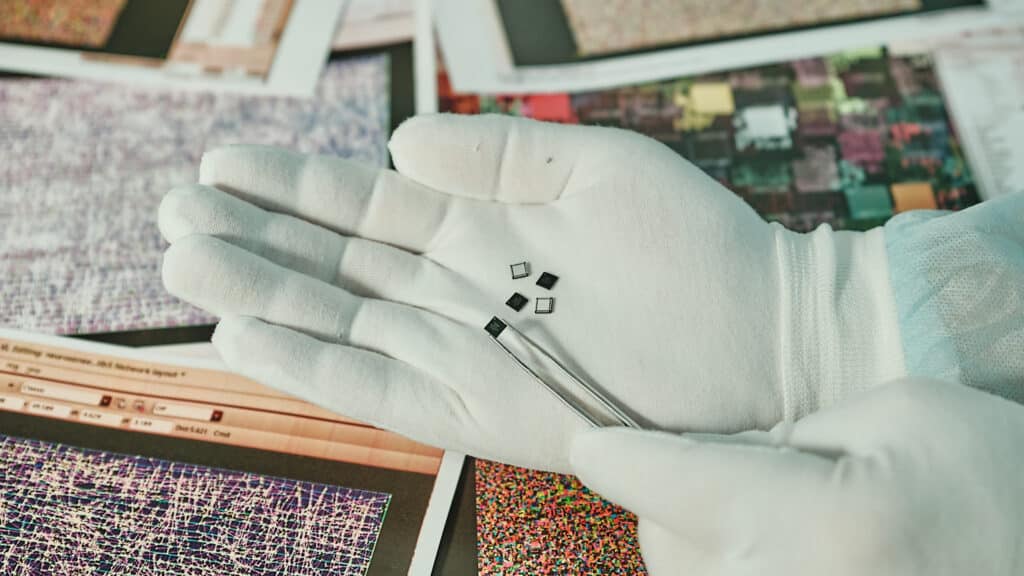
POLYN Technology has achieved an advancement in neuromorphic computing with the first successful silicon implementation of its NASP (Neuromorphic Analog Signal Processing) technology. The chip, recently demonstrated at CES Unveiled Europe in Amsterdam, processes AI workloads directly in the analog domain — cutting power use to microwatt levels and enabling true always-on intelligence at the edge.Unlike digital neural processors that rely on power-hungry data conversions, POLYN’s NASP chips perform AI inference directly on analog sensor signals in microseconds.
The key features are:
- Ultra-low latency: ~50 microseconds per inference
- Power efficiency: ~34 µW during continuous operation
- Fully asynchronous: No clock or ADC/DAC conversions required
- Optimized for: Battery-powered, wearable, industrial, automotive, and IoT devices
The first NASP chip features a Voice Activity Detection (VAD) core designed for real-time voice processing. It marks the beginning of a roadmap that includes speaker recognition and voice extraction cores — key building blocks for next-generation voice assistants, appliances, and communication headsets. Developers can now apply online for evaluation kits to begin integrating the NASP VAD chip into their own products.
What makes the NASP approach significant is its automatic conversion toolchain: trained digital neural network models are transformed into analog neuromorphic cores ready for standard CMOS manufacturing across 40–90 nm nodes. This bridges the gap between digital AI development and low-power analog hardware — allowing rapid, cost-efficient deployment of AI functions directly in sensors.
“This isn’t just another chip; it’s proof that our analog neural networks work in silicon.We’re bringing digital-class accuracy to the analog domain, at a fraction of the power,” said Aleksandr Timofeev, CEO and Founder of POLYN Technology.


