




From cassette tapes that once defined an era to components driving the future, TDK’s story is one of constant innovation. In this conversation, Gagan Bansal, President – Sales and Marketing, TDK India, shares how the company has evolved to shape today’s electronics and industrial systems, and how their India strategy, partnerships, and innovations reflect their mission to ‘be in everything, and make everything better.’
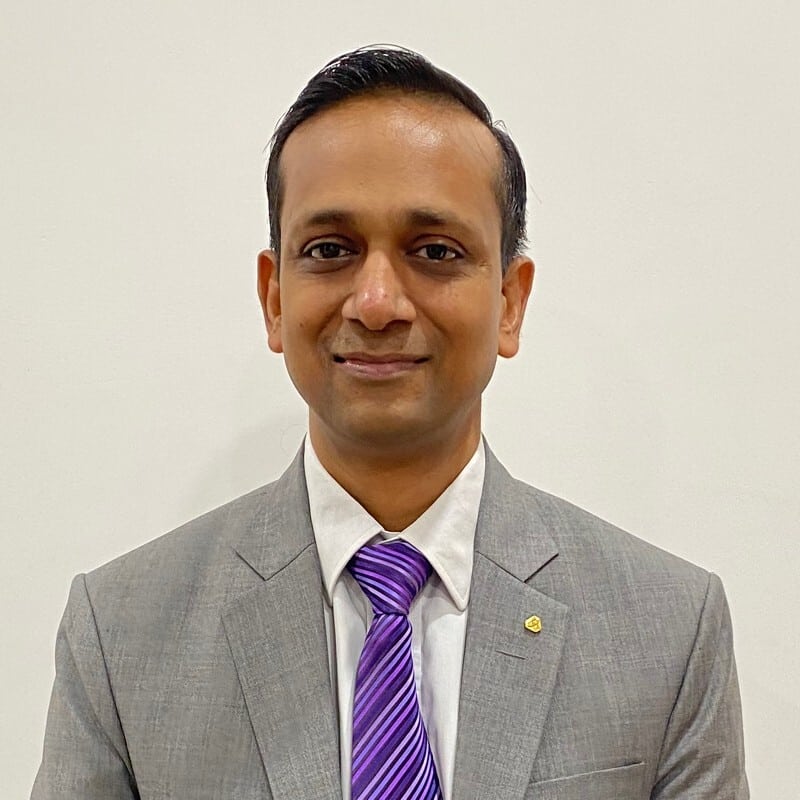
Q. TDK recently unveiled its new global tagline in September. Could you share the story behind it and what it represents for TDK? Additionally, for a non-technical CXO who may not be familiar with the brand, how would you explain TDK’s role in the world of electronics?
A. TDK started back in 1935 as the inventor of ferrite. When I was a young student, TDK was known for its cassettes. TDK was a household name and a prominent B2C brand. But over time, TDK transitioned into components, building our portfolio around ferrite-based products, MLCC, Inductors, Piezo technology, and communication devices.
The company’s expansion has been driven by in-house innovations complemented by targeted acquisitions across key markets.
For example, we had companies like SAE Magnetics for hard-disk drives; EPCOS was acquired in 2008; Tronics and InvenSense were also there for sensors; IC Sense, Micronas for Hall-effect sensors; and ATL Batteries as far back as 2005.
Today, batteries form a major part of our revenue. Quite likely, the smartphone you carry has a TDK battery. We also make medium-scale batteries.
If you look around, you’ll see your mobile phone, smartwatch, home appliances, car, train, or even the grid supplying power to your home. TDK operates behind the scenes, enabling nearly every system.
That is why our new tagline, which debuted in September, is ‘In everything, Better.’
Q. With India becoming a strong electronics manufacturing hub, how has this trend influenced TDK’s operations, investments, or strategy here?
A. TDK’s presence in India dates back to the late 1960s through EPCOS, originally established as a components division of Germany’s Siemens AG and later formed as a joint venture between Siemens and the former Matsushita.
The presence leaped in 1996 with the establishment of two production units, one in Nashik for capacitors and the other in Kalyani for ferrite, both of which have grown significantly over the years. These facilities serve both domestic and export markets. In fact, a large share of our production is exported.
As India’s electronics landscape evolved, particularly with the rise of mobile-phone manufacturing, we invested heavily in battery production. Today, we have three units in Bawal and Manesar and recently inaugurated another in Sohna. These belong to TDK Corporation globally, and together they position us as one of the largest lithium-ion battery manufacturers in India and the world. We are also bringing transformer and chokes production in India into our existing facilities.
Q. How important is India to TDK’s Asia and global roadmap?
A. India is central to our global growth strategy as a market and as an innovation partner. That is why we participated in Electronica India with one of the largest booths, a large number of demos and technology showcases, and over 25 international delegates.
When you look at India’s 1.4 billion people, the potential is enormous. There remains a huge scope for growth in energy, mobility, communication, home appliances, and smart technologies. We focus on three priority markets, including Automotive, Industrial, and ICT. All three remain equally critical to our India strategy.
Q. How does TDK collaborate with external R&D and innovation activities?
A. Recognising India’s strength as the third-largest startup hub globally, TDK launched TDK Ventures India, headquartered in Bengaluru. Through this venture arm, we have invested in four deep-tech startups, each applying TDK’s technologies in new and impactful ways:
- Infinite Uptime – Enables predictive maintenance through industrial IoT solutions.
- Exponent Energy – Builds fast-charging infrastructure for commercial electric vehicles.
- Fasal Technologies – Uses agritech to optimize crop yield and farm efficiency.
- Ultraviolette Automotive – Develops high-performance electric bikes for urban mobility.
Globally, TDK operates over 250 design centres and production units, including seven manufacturing sites and several offices in India, ensuring local access to cutting-edge technology.
Q. In which sectors—automotive, consumer electronics, industrial IoT, renewable energy, or medical—do you see the strongest demand in India for TDK’s components and systems over the next 2–3 years?
A. India has around 250 million households, driving a strong demand across all these sectors.
In each application, there are multiple stages like sensing, input, filtering, power management, output, cloud connectivity, etc. TDK, through its broad spectrum of portfolio participants, contributes to each of these stages. Moreover, we continue to expand our portfolio for upcoming applications like edge computing (with products from Sense AI) and AI Smart Glasses (with products from Soft Eye).
So, whether it is today’s traditional technologies or those of the next 5–10 years, TDK remains present across the full value chain, truly in everything, making everything better.
Q. What role do partnerships with Indian distributors play in TDK’s growth strategy?
A. Partnerships are crucial. Beyond venture investments and incubation initiatives, we maintain deep engagement with Indian design houses and OEMs.
TDK has been in India for over four decades, and I have personally been with the organisation for nearly 30 years. We are well-known across the country, especially among small and medium enterprises.
We have a sales force of over 85 people across multiple cities, with offices in Noida, Bengaluru, Mumbai, Pune, and Kolkata, as well as home offices in Lucknow, Ahmedabad, Chennai, and Indore.
For our film AC and PFC capacitor business, we work with close to 60 channel partners; for standard components, we collaborate with approximately one dozen partners. Our model is hybrid: we sell both directly and through distribution. We also engage with all the leading EMS companies in India.
Every customer’s need is different, and every customer is important to us. Wherever we cannot reach directly, our distributors bridge that gap. This combination works very well and will continue to do so.
Q. Are there any exciting product innovations that TDK focused on, which you would like to share?
A. We are driving several innovations globally. For example, our full-laser colour module for smart glasses enables direct retinal projection, splitting light into 16 million colours with very low power consumption, which is ideal for AR/VR applications.
Another breakthrough is free-air noise-cancellation technology that combines MEMS microphones, piezoelectric speakers, and digital signal processing. Unlike conventional headphones, it cancels noise without requiring ear inserts.
One of our customers has developed a smart cane for the visually impaired, integrating TDK’s MEMS microphone, a time-of-flight sensor for object detection, and a motion sensor for navigation.
And then there is Piezo Listen, a paper-thin (about 2mm) speaker that produces high-quality sound on flat panels. You can literally control the volume by touching the screen. It is a notable innovation shaping the next generation of ultra-slim TVs and displays.
All these are TDK’s own products, and while we often co-develop applications with partners, the core technology remains entirely ours.
Q. Engineers often face trade-offs between size, cost, performance, and ease of integration when selecting protection components. How does TDK help them with that?
A. That is a great question. One of TDK’s biggest strengths is in materials technology. It allows us to push miniaturisation while maintaining performance and reliability.
We offer extensive online simulation tools on our website, which help design engineers choose the right components. If those tools are not enough, our local sales team connects them directly with TDK’s design and development engineers worldwide for collaborative development.
Everything today is getting slimmer, lighter, and more energy-efficient, from smartphones to EVs, and TDK supports engineers at every step in achieving this.
Q. Would you like to share any known example where TDK helped a customer solve a design limitation thanks to a novel product or system?
A. The smart cane for the visually impaired is one example that clearly shows this. By integrating sensing, sound, and motion technologies, we helped create a product that enhances mobility and safety.
Many such collaborations happen jointly with our customers, where we contribute both technology and application know-how. That, in essence, is how TDK adds value.
Q. Any specific message you want to share with design engineers reading this interview?
A. To design engineers specifically, my message is this:
TDK is a top-end technology company. Our strengths lie in materials, processing, production capability, scaling, simulation, and testing.
When you work with TDK, you access that expertise directly; there are no intermediaries. We focus on the total cost of ownership, not just upfront pricing. Over a product’s lifetime, TDK solutions deliver better value, higher reliability, and an enhanced end-user experience.
In short, TDK offers four key benefits:
- Cutting-edge technology and expertise
- Best value over the product’s lifetime
- Better customer and consumer experience
- A one-stop shop with a vast portfolio and proven quality
So, when you choose TDK, you choose a long-standing technology supplier with deep roots in India, and an organisation that is in everything, everywhere, driving innovation and progress, and trying to make the world better.

