




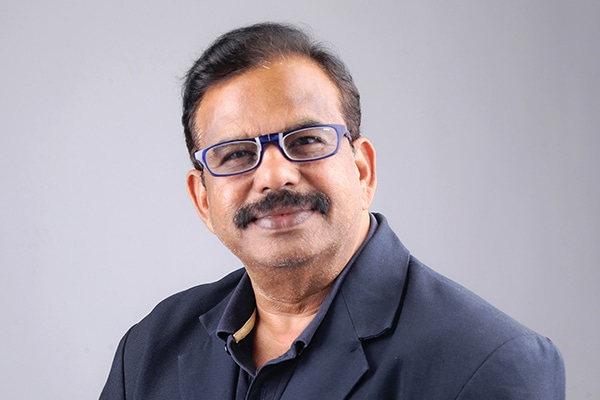
In an interaction with EFY’s Nitisha Dubey, Suresh Babu of Caliber Interconnect Solutions details how the company provides comprehensive end-to-end solutions, from silicon IP development and validation to PCB assembly and product testing, while supporting global technology leaders, fortifying local supply chains, and gearing up for a major entry into silicon carbide power device manufacturing.
Q. Can you describe your company’s core capabilities and the range of services you offer across different industries?
A. Our core strength lies in providing end-to-end semiconductor solutions, from silicon design engineering and IP development through silicon validation to packaging, interface boards, HDI PCB design, signal and power integrity analysis, thermal simulations, and complete test program development. In addition to semiconductor services, we are deeply involved in power electronics, developing products for clean energy, electric mobility, medical electronics, railways, defence, space, and national institutions such as CDAC and ISRO.
Q. Does this mean you provide complete end-to-end services, from design to testing?
A. Yes, our capabilities extend beyond PCBs. We begin with silicon design engineering, IP development, and validation. On the testing side, we design all interface boards required for silicon testing, handle package substrate design, perform signal and power integrity simulations, conduct thermal analysis, and develop embedded systems. We also maintain a comprehensive test and validation infrastructure, including test equipment and programme development capabilities, all under one roof.
Q. As chip complexity increases and nodes shrink, what testing gaps do you see between silicon, package, and board?
A. As AI and high-performance workloads drive up silicon complexity, testing demands also increase, often representing nearly 50 per cent of total design cost. The largest gaps usually occur when testing is treated as a downstream activity. At Caliber, we engage early with design teams to optimise architectures, reduce test time, improve coverage, and prevent late-stage issues. Automation is central to both design and testing.
Q. With so many companies offering design and testing services, how does Caliber differentiate itself?
A. Differentiation today is not about having a secret solution that no one else knows. Differentiation is about speed, execution, and integration. Because we work across IP development, design, packaging, and testing, we understand challenges from the very beginning of the design cycle. Our IP teams work closely with test engineers and packaging teams, allowing us to anticipate issues early and respond faster. This integrated model helps customers reach the market more quickly, which is critical in today’s competitive environment.
Q. What does your client mix look like, and how do you manage diverse customer requirements?
A. With over 25 years in this field, we support most major semiconductor companies. Our customers include global leaders such as Intel, NVIDIA, AMD, and Cisco, as well as test equipment companies such as Teradyne and Advantest. Each client has unique requirements, so we build dedicated teams aligned with their technology and specifications. This enables us to support multiple clients simultaneously without compromising quality or timelines.
Q. Supply chains are a major concern today. How do you manage this aspect?
A. Supply chain management is largely about long-term relationships and a deep understanding of supplier capabilities. Over time, we have built strong partnerships with wafer foundries, package houses, and PCB manufacturers. Depending on customer requirements, we select suppliers based on precision, quality, and material needs. While many components are currently sourced from Taiwan and China, we rigorously validate reliability through audits and site visits. Simultaneously, we are localising manufacturing in India, including PCB assembly and, eventually, advanced packaging.
Q. How do you ensure timely delivery and maintain customer trust?
A. We focus on our strengths and avoid overcommitting. We do not oversell or make promises we cannot keep. Whatever we commit to, we deliver. Nearly 90 per cent of our revenue comes from customers outside India. Addressing customer pain points, understanding resource gaps, and aligning our teams are central to our operation.
Q. What role do quality compliance and data security play in your operations?
A. Data security is the foremost requirement for a services company. Customer data and IP are highly sensitive; we maintain ISO 27001 certification, operate a private cloud infrastructure, and conduct regular audits. Customers can audit our facilities. Quality is next. While we follow ISO 9001 and AS 9100, many clients have their own quality standards. We align with them to ensure compliance on both sides.
Q. How important are advanced packaging and HDI to your growth strategy?
A. Advanced packaging is foundational for next-generation systems, particularly AI and high-performance computing. Technologies like 2.5D, 3D packaging, co-packaged optics, wafer-level processes, and ultra-high-density interconnects are essential. Some PCBs we design reach 120–130 layers, requiring close collaboration with specialised manufacturers in Japan and Korea. These technologies directly support our revenue growth and long-term positioning.
Q. What is the current revenue mix between services and products?
A. Around 90 per cent of our revenue comes from services, while products contribute about 10 per cent. Product development cycles are long, especially in regulated sectors like railways and defence. Several products have completed development and certification, and product revenue is expected to grow significantly in the coming years.
Q. Can you tell us about your workforce and facilities?
A. We have over 800 engineers and plan to add at least 200 more in the next year. Our front-end engineering team is in Bengaluru, while execution, R&D, testing, and manufacturing are in Coimbatore and Madurai. Coimbatore serves as the headquarters and primary design hub, with an SMT line to maintain quality and delivery control.
Q. Can you share some details about your R&D team?
A. We have 12–15 PhD-level researchers in VLSI, microelectronics, embedded systems, and related fields. They study technology trends, market requirements, and emerging challenges, working closely with engineering teams to align with future needs.
Q. How do you approach hiring and training talent?
A. Most hiring is at the college level. We recruit fresh graduates and provide extensive technical and cultural training. Engineers undergo three to six months of structured training before joining production teams. Senior engineers with over 10 years of experience mentor them in PCB, package, test engineering, and IP development.
Q. What challenges do you see in the current semiconductor ecosystem?
A. The industry is evolving rapidly. One shift is from monolithic chips to chiplet-based architectures, integrating multiple dies from different nodes and IP vendors into a single package. This creates challenges in testing, integration, power delivery, and thermal management. Another emerging challenge is high-speed data transfer and co-packaged photonics, where electronic and photonic circuits coexist. Testing heterogeneous systems requires new methodologies, which we continuously adapt.
Q. What are your growth expectations for the next few years?
A. Last year, we achieved 20 per cent growth. Over the next two years, we conservatively expect 50–60 per cent growth, with potential for higher levels. Expansion in semiconductor services and commercialisation of our power electronics products will drive this growth.
