




One system design across regions can reduce delays. A new platform proposes this approach. Its impact on deployment planning is worth understanding.
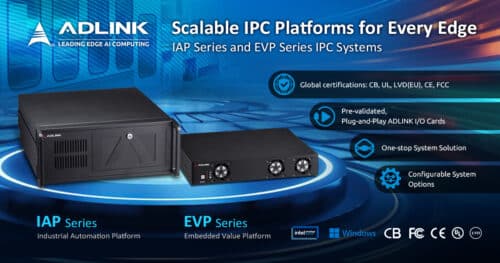
Industrial equipment makers expanding across regions often lose months to safety approvals, regulatory checks, and hardware redesigns. To reduce these delays, ADLINK has introduced a new range of industrial computers with built-in global compliance.
For automation, semiconductor, and commercial equipment manufacturers, meeting different safety rules in North America, Europe, and Asia-Pacific usually means redesigning systems, re-testing hardware, and repeating certification cycles. This slows product launches, raises engineering effort, and increases cost. The new industrial platforms are designed to allow one system design to be deployed across regions without hardware changes, reducing certification time and speeding up market entry.
By meeting major global safety and electromagnetic standards, the systems let OEMs use the same platform across multiple geographies. This simplifies compliance management, reduces documentation work, and supports parallel product rollouts in different markets. For companies scaling production across regions, this helps maintain stable manufacturing and faster deployment schedules.
The platforms target industrial automation, semiconductor tools, machine control, vision inspection, and edge AI workloads. High-performance configurations support multi-camera vision, AI inference, and data-heavy processing, while energy-efficient models focus on control-driven and mixed workloads. This allows equipment makers to choose performance levels based on application needs without changing their core system design.
For space-constrained systems, compact models address the need for small, integrated computing in smart retail, self-service kiosks, and distributed edge control nodes. By combining processing, storage, I/O, and expansion into a slim form factor, these systems reduce cabinet space, wiring complexity, and installation effort.
To further shorten development cycles, the platforms are pre-tested with motion control, vision capture, data acquisition, GPU acceleration, and industrial storage modules. This removes compatibility testing and tuning work, improving system reliability under continuous operation. Remote monitoring and device management tools also allow centralized control of deployed systems, helping enterprises manage large fleets with lower maintenance effort.


