




Turning your IoT prototype into a real product can be difficult. This board puts all connections and security in one place to make it easier.
As we all know prototyping is very important before moving to the real product. But when we talk about IoT products, moving from prototype to the real product can be difficult as ioT and edge deployments are tricky. The single board computers (SBCs) in the market that are considered as hobby-grade generally do not offer secure boot, long-term availability, or reliable multi-protocol wireless support. So we have to combine separate modules for Wi-Fi, cellular, BLE, Thread, ZigBee, and wired interfaces, which increases complexity, delays certification, and makes large-scale maintenance difficult.
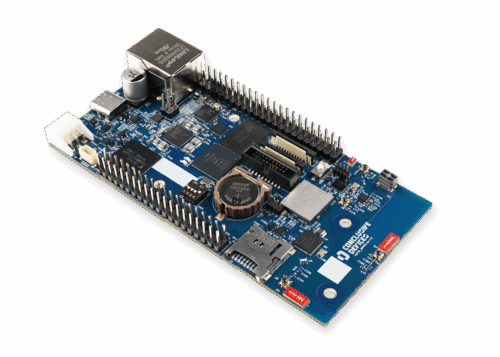
Conclusive Engineering claims to fill this gap with the KSTR-IMX93, a Linux-ready board built for production use rather than experimentation. It brings Wi-Fi 6, BLE 5.4, Thread, ZigBee, Matter-readiness, LTE-M/NB-IoT with GNSS, Gigabit Ethernet, PoE, and CAN-FD onto a single platform, reducing the number of external modules needed.
The system pairs NXP’s i.MX93 with Nordic’s nRF5340, nRF9151, and nRF7002 chipsets, letting developers run application logic on Linux while using Zephyr on the M-class core for low-power or real-time tasks. You can start fast with Ubuntu, then shift to Yocto or Buildroot for production images. Hardware-level security is handled through NXP’s EdgeLock Secure Enclave, helping secure boot and trusted execution without extra components.
Some of the key features include:
- Runs on an i.MX93 chip with two Cortex-A55 cores and one Cortex-M33 core.
- Supports Wi-Fi 6, Bluetooth LE, Thread, ZigBee, LTE-M, NB-IoT, GPS, and DECT NR+.
- Works with Linux (Ubuntu, Yocto, Buildroot) and Zephyr, and supports OTA updates.
- Can add a small NPU (0.5 TOPS).
- Size: 110 × 55 mm.
For edge-AI requirements, an optional NPU provides up to 0.5 TOPS for on-device inference tasks like anomaly detection, predictive maintenance, or simple vision processing. Power options like PoE, USB-C, or Li-Ion battery support always-on or mobile designs, while OTA workflows make fleet updates manageable.

