

3D sensing technologies that could give autonomous vehicles and surgical robots more accurate environmental awareness, improving precision, safety, and real-time decision-making across next-generation electronic systems.
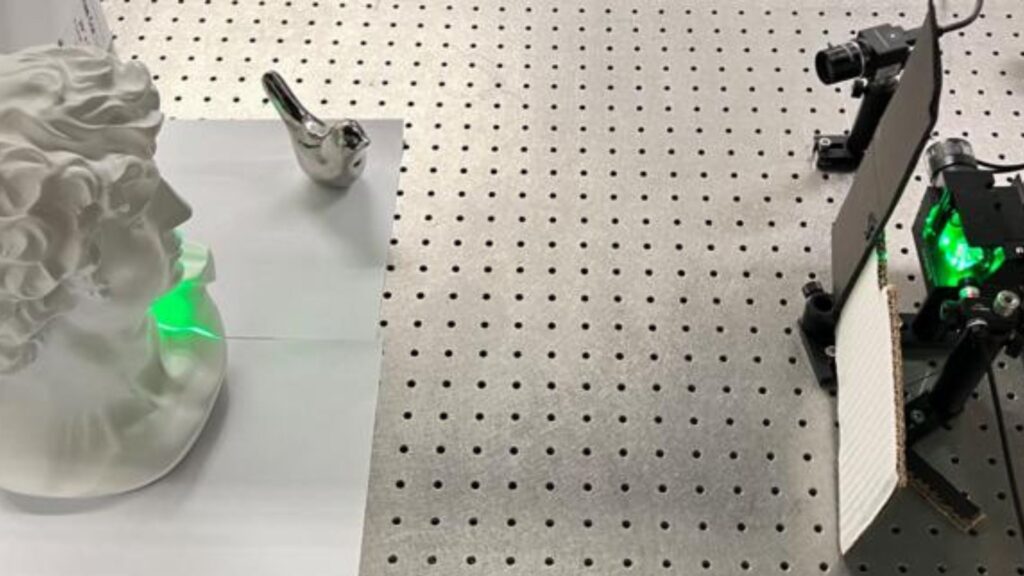
New developments in 3D sensing technology could significantly improve the way autonomous vehicles and robotic surgical systems perceive and respond to their environments, potentially increasing both safety and operational accuracy.
Researchers at the University of Arizona are exploring advanced sensing methods that generate richer three-dimensional maps with greater precision and speed than conventional approaches. Unlike traditional systems that often struggle with weak reflected signals, varying lighting conditions, or limited depth perception, the newer techniques provide improved object detection and spatial understanding.
For self-driving vehicles, better depth sensing can translate into more reliable identification of pedestrians, road signs, cyclists, and small obstacles. Existing autonomous platforms rely heavily on combinations of cameras, radar, and LiDAR systems, but limitations remain in difficult environments such as bright sunlight, rain, or cluttered road conditions. Enhanced 3D sensing systems could deliver more detailed point-cloud information while improving response speed and reducing perception errors.
The technology may also reduce hardware complexity. Emerging approaches increasingly combine multiple sensing functions into compact systems, potentially lowering component count, calibration requirements, and overall cost. This could make advanced sensing more practical for wider deployment across automotive electronics platforms.
The medical field may see similar benefits. Robotic surgery systems require extremely accurate visual feedback to position instruments with high precision. Improved depth sensing and 3D imaging could allow surgical robots to better understand anatomical structures and track movement in real time, supporting more precise interventions and potentially reducing procedural risks.
As robotics and autonomous technologies continue moving toward higher levels of automation, sensing capabilities are becoming a critical differentiator. Industry efforts increasingly focus on enabling machines to create detailed real-world models that support faster decisions and more reliable operation in dynamic environments.