Old EV batteries could become a valuable resource. A new method pulls lithium out cleanly and efficiently, turning waste into ready-to-use battery material.
As electric vehicles spread rapidly, old battery packs are becoming a growing source of waste. Mining and refining lithium is expensive, and most recycling methods use a lot of energy and chemicals, usually producing lithium carbonate that then needs extra processing to become lithium hydroxide.
Engineers at Rice University have found a cleaner way. Instead of smelting or dissolving shredded battery materials in strong acids, they recharge the waste cathodes to release lithium ions into water, where they react with hydroxide to create high-purity lithium hydroxide.
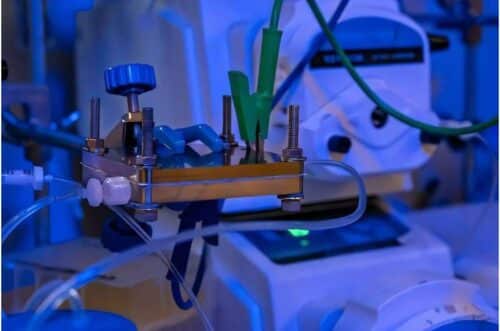
A new recycling method applies the same principle as battery charging to waste cathode materials. In a working battery, charging pulls lithium ions out of the cathode. The system adapts this reaction to materials such as lithium iron phosphate. Lithium ions move across a thin cation-exchange membrane into a flowing water stream, while water at the counter electrode is split to generate hydroxide. The lithium and hydroxide then combine to form high-purity lithium hydroxide without using strong acids or additional chemicals.
The method uses a zero-gap membrane-electrode reactor that requires only electricity, water, and battery waste. In some operating modes, it consumed as little as 103 kilojoules of energy per kilogram of material, roughly ten times less than conventional acid-leaching methods. The reactor was scaled to 20 square centimeters, ran continuously for 1,000 hours, and processed 57 grams of industrial black mass while maintaining nearly 90% lithium recovery.
The process produces lithium hydroxide exceeding 99% purity, ready for direct use in battery manufacturing. It works with multiple battery chemistries, including lithium iron phosphate, lithium manganese oxide, and nickel-manganese-cobalt variants. A roll-to-roll demonstration showed that entire lithium iron phosphate electrodes could be processed directly from aluminum foil, without scraping or pretreatment, highlighting potential integration into automated recycling lines.
Future plans focus on larger reactor stacks, higher black mass loading, and improved membranes for greater efficiency at higher lithium hydroxide concentrations. Post-processing steps like concentration and crystallization are identified as key opportunities to further reduce energy use and emissions. This approach simplifies lithium recovery, lowers waste, and could help make the battery supply chain more sustainable.