

Distillery byproducts converted into high-performance supercapacitors, boosting energy density and sustainability
Josiel Barrios Cossio
Researchers at the University of Kentucky have developed a method to convert bourbon distillery waste into high-performance supercapacitors, addressing both industrial waste and energy storage challenges. The work demonstrates how stillage, a grain-rich byproduct of whiskey production, can be repurposed into advanced carbon electrodes.
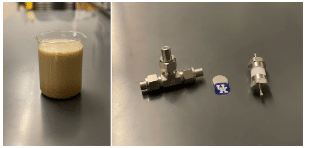
Bourbon production generates massive waste volumes, with stillage volumes up to 6–10 times those of the final product. This semi-liquid residue is difficult and costly to transport or process, typically ending up as low-value animal feed or fertiliser. The research team instead leveraged hydrothermal carbonisation, a high-pressure, heat-driven process, to directly convert the wet waste into carbon-rich materials without extensive pre-drying.
The resulting material was processed into two electrode types: hard carbon and activated carbon. Hard carbon, with its disordered structure, enhances lithium-ion storage, while activated carbon offers high մակroporosity for charge accumulation. These complementary properties enabled the fabrication of both conventional electric double-layer capacitors and hybrid lithium-ion supercapacitors.
Performance results highlight the technology’s potential. Prototype devices matched or exceeded commercial supercapacitors in energy density, achieving around 48 Wh/kg in standard configurations. More significantly, hybrid lithium-ion variants delivered up to 25 times the energy density of conventional supercapacitors while maintaining durability over thousands of charge cycles.
A key innovation is the use of a single agricultural waste stream to produce both electrodes in a single device a rare approach in hybrid energy storage systems. This simplifies material sourcing and could reduce manufacturing complexity. The research also positions waste-derived carbon as a scalable alternative to conventional electrode materials, with implications for grid stabilisation and renewable energy integration. By transforming a regional industrial byproduct into a high-value energy component, the work aligns sustainability with performance.
Next, the team plans to scale the technology, optimise electrochemical behaviour, and assess lifecycle and economic feasibility for commercialisation. If successful, the approach could establish a circular pathway linking food industry waste to advanced electronics and energy storage systems.