




A new development board merges single-board computer performance with microcontroller precision, enabling developers to build AI, IoT, and advanced embedded applications on a single compact platform.
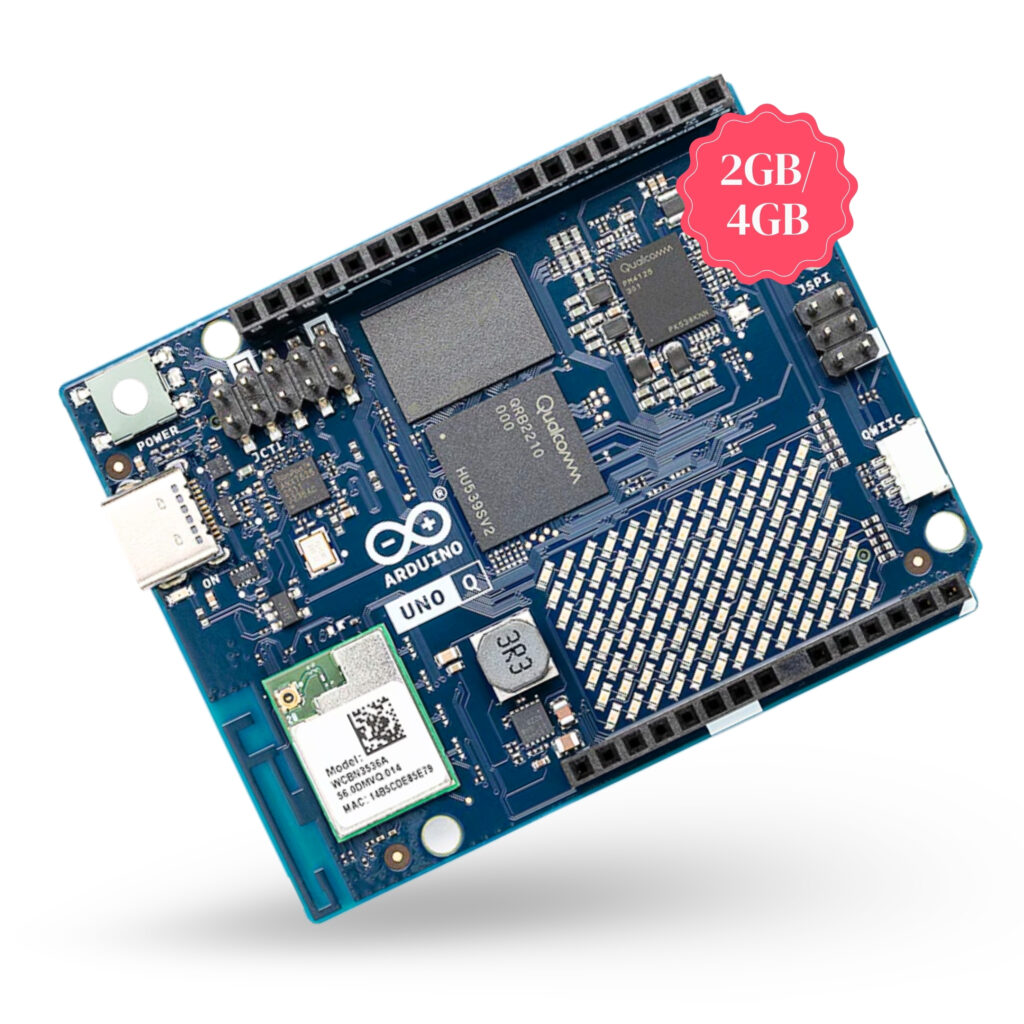
A new hybrid development platform by Rajguru Electronics aims to simplify the process of building advanced embedded systems by combining the capabilities of a single-board computer with the deterministic control of a microcontroller.The board is designed to support AI, IoT and complex edge computing workloads while maintaining compatibility with widely used maker and professional development tools. By integrating a high-performance application processor with a real-time microcontroller unit (MCU), the platform allows developers to run high-level operating systems alongside time-critical firmware tasks on the same device.
At its core, the board is powered by a Qualcomm Dragonwing QRB2210 processor paired with an STM32U585 MCU. This architecture enables developers to manage compute-intensive workloads—such as AI inference, data processing and multitasking—while maintaining precise hardware control for sensors, robotics, and real-time automation tasks.
The key features are:
- Hybrid architecture combining application processor and real-time MCU
- Up to 4 GB RAM and 32 GB eMMC storage for edge AI workloads
- Support for Debian Linux, Python applications and embedded sketches
- Designed for AI, robotics, machine vision and IoT prototyping
- Compatible with existing development hardware ecosystems
With up to 4 GB of RAM and 32 GB of onboard eMMC storage, the platform can run complex AI models and data-heavy applications directly at the edge. The board also supports Linux-based environments, allowing developers to deploy applications written in Python and other high-level languages while still using familiar embedded development workflows.
A Debian Linux operating system enables the execution of Linux applications alongside traditional sketches developed in embedded IDE environments. This dual-environment capability helps bridge the gap between embedded systems development and modern software engineering workflows.
The board is designed to remain fully compatible with the wider hardware ecosystem commonly used for rapid prototyping. This compatibility allows developers to reuse existing modules, shields and peripheral devices while experimenting with more advanced edge computing workloads.
The hybrid architecture makes the platform suitable for robotics, machine-vision projects, industrial IoT deployments and next-generation connected devices that require both real-time responsiveness and high-performance computing.By merging microcontroller determinism with Linux-level computing power, the board targets developers seeking a single platform capable of handling both embedded control and AI-driven edge processing.


