




Imagine a lens less than a millimeter thick that can make 3D images float in mid-air. Compact, wearable and full of depth, this could change how we see displays.
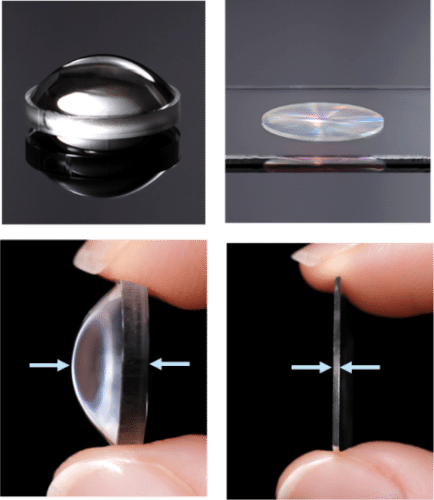
Kyocera Corporation has developed a new meta-lens using metasurface-based optical technology that can precisely control focal positions based on light wavelength. Using this lens, Kyocera built a prototype wearable aerial display that combines a compact optical system with natural depth perception.
A meta-lens is an ultra-thin optical component that uses a metasurface, a dense layer of tiny pillar-shaped structures smaller than the wavelength of light, to control how light moves. This design lets Kyocera make a lens less than 1 mm thick, compared with conventional lenses that usually need over 1 cm.
By carefully shaping these tiny structures, a single meta-lens can perform multiple optical functions, like controlling wavelength and phase. This cuts down the number of separate optical parts needed, allowing the overall system and device to be much smaller and lighter.
Using its proprietary meta-atom design technology, Kyocera created a meta-lens whose focal position changes based on the color of light. This means images of different colors form at different distances—for instance, green images appear farther away while red images appear closer. By projecting images at multiple depths, the system produces three-dimensional aerial visuals with clear depth cues, all within a compact, wearable-sized optical module. This approach delivers natural depth perception without bulky multi-layer optics.
By combining the new meta-lens with Kyocera’s existing aerial imaging technologies, developed through research on high-resolution aerial displays, the company created a compact, lightweight wearable display that can project floating images with realistic depth. This represents a significant step toward next-generation visual interfaces that bring high-quality optics into small, body-worn devices.
Currently, the technology produces aerial images with focal positions that change by color. In the future, improved wavelength control could enable full-color, high-resolution aerial images, and advances in meta-atom design may allow smooth 3D visuals to be projected into mid-air.
The thin and lightweight design of meta-lenses makes them suitable for:
- Smaller, wearable VR/AR glasses
- Slimmer, space-saving cameras and projectors
- Other optical devices where compactness is crucial
The company plans to continue advancing its meta-lens technology to support optical innovations across consumer electronics, industrial equipment, and emerging applications.


