Imagine your cushion, backpack, or mouse responding when you tap, twist, or squeeze it, giving feedback while staying soft. Technology is making touch work.
People often struggle to control devices while holding or wearing soft, flexible objects. Buttons or screens can feel disconnected from what they are touching, limiting intuitive interaction.
The University of Bath has developed HydroHaptics, a system that lets users tap, twist, or pinch soft objects such as cushions, clothing, or flexible mice and receive meaningful responses. Objects can, for example, change TV channels, turn off lights, or create digital sculptures on a screen. They also provide tactile feedback, such as clicks or vibrations, while staying soft and flexible.
HydroHaptics senses user input through the object and delivers detailed haptic responses via its flexible surface, enabling intuitive touch-based interactions. It is the first technology to provide high-fidelity feedback through a soft surface without compromising flexibility. A compact motor paired with a sealed liquid-filled chamber transmits forces, letting users feel clicks, vibrations, and varying resistance while the object remains pliable.
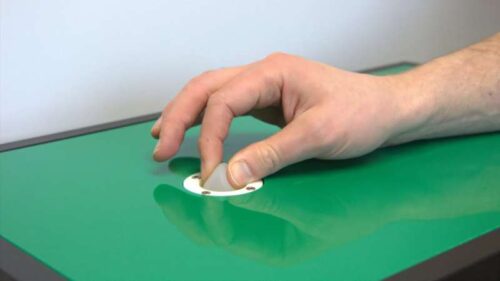
Researchers have demonstrated HydroHaptics in four everyday objects. A cushion with a HydroHaptic pouch lets users press or squeeze to control smart home devices. A deformable 3D joystick provides haptic feedback during gameplay, simulating resistance, tension, or impact. An augmented backpack delivers tactile notifications and directional cues through gentle shoulder taps. A soft silicone-dome computer mouse allows users to sculpt digital objects, with feedback simulating material stiffness.
Previous soft interfaces provided only low-fidelity or highly localized feedback, but HydroHaptics delivers high-resolution sensations across larger surfaces. With further development to reduce the size of the haptic engine, HydroHaptics could become a market-ready product in a few years, bringing tactile, responsive interactions to everyday objects.