Lights are running when no one’s around? New sensors track motion and daylight, cut energy waste, and give managers real data to control industrial lighting better.
Lighting in large industrial spaces often stays on longer than needed because managers have limited visibility into actual activity and daylight levels. This leads to wasted energy, higher costs, and difficulty keeping lighting consistent across manufacturing floors, warehouses, logistics hubs and indoor parking areas.
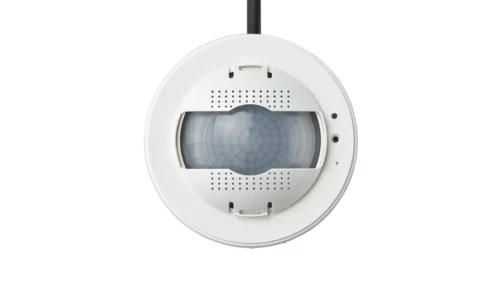
Signify’s new mains-powered motion and daylight DALI sensor is designed to address these issues. It switches lights only when needed by combining daylight measurement with Passive Infrared (PIR) motion detection. This helps facilities reduce unnecessary lighting use and maintain more predictable lighting conditions for workers.
For teams already using the Interact connected lighting platform, the sensor adds detailed data on light use and occupancy. Managers can study these metrics to adjust lighting schedules, optimize zones and track energy patterns. The sensor works with several luminaire families, so it can fit into existing installations without major redesign.
The device covers ceiling heights from 2 to 16 metres, which suits most industrial layouts. Its adjustable sensitivity lets users tune it to how people and machines move in each space. Zigbee wireless communication gives a range of up to 50 metres, and some variants include higher IP and IK ratings for dusty, damp or rough environments.

The sensor supports the DALI-2 standard (parts 251, 252 and 253) for energy reporting. Up to 10 DALI drivers can connect through its 20 mA port, and setup can be done through the Interact Pro app via Bluetooth or with an IR remote.
Greg Nelson, EVP & Business Leader, Professional Systems & Services at Signify said: “Connected lighting can help address many of the challenges industrial businesses face. With this new mains-powered DALI sensor, building operators can more easily reduce wasteful energy use and, through automation and advanced data metrics, better manage the use of light throughout the day.”