Measuring high signals is no longer complex. We can now test, debug, and fix problems. Read how it works.
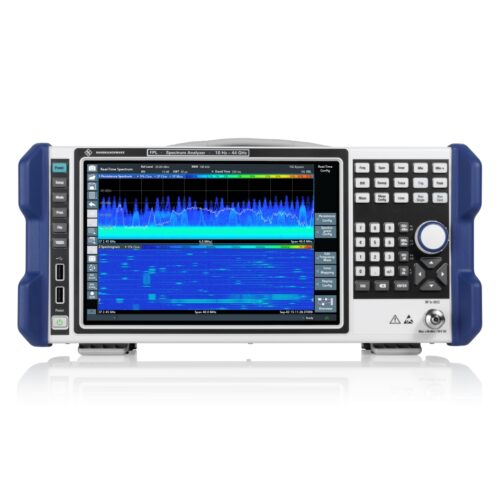
Engineers working on satellite, radar, aerospace, and high-frequency RF systems often struggle to test signals above 26.5 GHz without using large, expensive lab instruments. This limits access to Ka-band testing for smaller labs, production teams, and field engineers. Rohde & Schwarz addresses this gap with the R&S FPL1044, which enables measurements up to 44 GHz in a compact, mid-range spectrum analyzer, making high-frequency testing more accessible and practical.
Many applications also require capturing very short and unpredictable signal events, which conventional spectrum analyzers can miss. The company has also introduced a 40 MHz real-time spectrum analysis option for the full FPL series, allowing engineers to detect and analyze transient signals with a probability of intercept as low as 4.2 µs. This helps in troubleshooting interference, validating system performance, and analyzing burst signals in real operating conditions.
The FPL1044 supports measurements from as low as 10 Hz using DC coupling, enabling analysis across a wide frequency span in a single instrument. This is useful for tasks that involve both low-frequency and millimeter-wave signals, such as system validation, component testing, and mixed-signal troubleshooting.
Its compact size, low weight, and rugged design support bench use, production testing, and field deployment. A 2.92 mm input connector ensures stable measurements at high frequencies, supporting consistent test results in demanding environments.
The 26.5 GHz to 44 GHz range is critical for satellite communication, radar, navigation, earth observation, and radio astronomy. Typical users include aerospace and defense engineers, RF component designers, production test teams, and maintenance engineers who need reliable, high-frequency analysis without the cost and complexity of high-end lab systems.