The sensor measures distance, detects single photons, works in light and dark, fits small spaces, and helps drones and robots in measurement tasks.
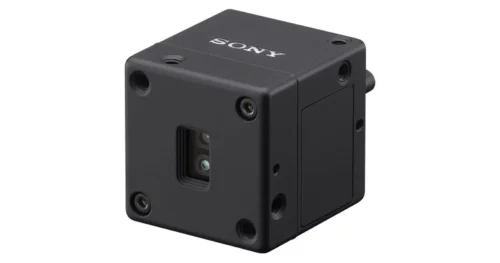
Sony has announced the AS-DT1, a LiDAR depth sensor focusing on miniaturisation. Measuring 29 x 29 x 31 millimetres, excluding protrusions, the AS-DT1 is described as the smallest and lightest device in its category. It was developed using miniaturisation and optical technologies from Sony’s machine vision cameras and was designed to measure distance and range.
The device has a cube shape, with an aluminium body, a lens on one side, the Sony logo on top, and multiple mounting points. The sensor uses Sony’s Single Photon Avalanche Diode (SPAD) image sensor and employs Direct Time-of-Flight (dToF) LiDAR technology. According to Sony Semiconductor Solutions Corporation, SPAD sensors can detect photons reflected from surfaces, essential for LiDAR to determine distance.
Unlike CMOS sensors that detect light by accumulating it over time in each pixel, SPAD sensors detect and count individual photons. This method supports operation in low-light environments. However, SPAD sensors are not commonly used in general-purpose cameras due to resolution, cost, and light-handling capacity constraints. The AS-DT1 is intended for applications where space and weight are limited, including drones, robots, and autonomous systems. It may also be used in automotive LiDAR systems.
Some of the key features of the AS-DT1 include:
- Detects single photons
- Works in low light
- Measures long distances
- Finds hard-to-see objects
- Works indoors and outdoors
- Fits in drones and robots
The sensor can detect low-contrast and low-reflectivity objects. It functions in various lighting conditions and environments. Sony states it is suitable for indoor and outdoor use, including in locations with people and fixtures. It can measure distances up to 10 meters with a margin of error of 5 centimetres. It supports measurements up to 40 meters indoors and 20 meters outdoors under daylight. These features are aimed at uses such as inspection of bridges, highways, and dams.
For more information, click here.