Friday, December 26, 2025

These Female Founders Are Turning Farm Waste into High-Performance Batteries

Turning crop residue into power, a new battery is promising lithium-level performance, safer charging, lower costs, and full biodegradability! Can this innovation reshape clean energy? Speaking to Nishita Baliarsingh of Nexus Power, Nidhi Agarwal from EFY explores the possibility.
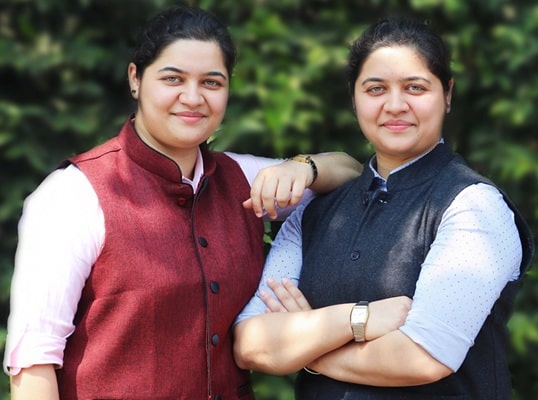

(left to right): Nishita Baliarsingh and Nikita Baliarsingh Founders, Nexus Power
(left to right): Nishita Baliarsingh and Nikita Baliarsingh, Founders, Nexus Power

Q. When did you start your startup? What inspired you?

A. We officially began in August 2020, though the idea came up in late 2019 during a late-night conversation between my identical twin sister, who is one of the co-founders, and me. We were both interested in sustainability and wanted to do something for the environment. While exploring the electric vehicle (EV) market, we realised that batteries are a significant component, but not very sustainable. They use scarce materials, can be hazardous, and sometimes catch fire. High battery costs also drive up EV costs. We decided to focus on battery technology and started researching safer, more abundant alternatives. That led us to develop batteries from natural biomaterials, including crop residue, thereby addressing environmental issues such as air pollution from crop burning. During the 2020 COVID-19 lockdown, our first home experiment successfully produced a 5V cell, confirming the concept.

- Advertisement -

Q. What is the idea behind the name Nexus Power?

A. Well, ‘Nexus’ means connection or putting things together, which mirrors how we connect multiple cells to build batteries for EVs and grid storage, producing more sustainable energy solutions.

Q. Could you share what kinds of batteries you are developing, the applications they are designed for, and the industries or users you are primarily targeting?

A. We make rechargeable batteries that can replace lithium batteries. In principle, anything that uses rechargeable batteries could use ours. Still, we are primarily focusing on EVs, including two-wheelers, three-wheelers, four-wheelers, and golf carts, as well as stationary energy storage systems such as those used in solar or wind plants. We operate exclusively business-to-business (B2B), selling our batteries to original equipment manufacturers (OEMs), not directly to consumers.

Q. Can you name any customers currently using your batteries?

A. The batteries are still in pilot trials and market tests, not commercial sales, as certifications and licensing are pending. While specific names cannot be shared, there are several companies across the country participating in these trials and tests. We are not generating any revenue commercially from our customers.

- Advertisement -

Q. Do you have your own manufacturing facility, or do you outsource production?

A. We have a pilot manufacturing line at our headquarters in Bhubaneswar, where we handle material synthesis and cell layering. We also rent additional lab and equipment space nationwide to accelerate production. We plan to scale up this line in the next three to four months.

Q. How is your team structured? Do you have separate teams for R&D, design, and other functions?

A. The team is small, about 30 to 40 people. One major group is research and development (R&D), which handles material synthesis, applications, and testing, primarily involving PhD and postdoc scholars. There is a design team for packaging, layering, and cell modelling. The team also includes finance, HR, and a few people in brand management and marketing.

Q. Have you received any government support or incentives for your startup so far?

A. We began with grants from the governments of India and Odisha, including Startup Odisha, and received support from the Ministry of Electronics and Information Technology (MeitY), the Department of Biotechnology (DBT) and the Biotechnology Industry Research Assistance Council (BIRAC). We later raised equity from 2022 onwards. Government support continues through PSU collaborations for testing and trials and projects with state departments, though we are not fully dependent on policy support.

Q. How does the chemistry of your biodegradable batteries differ from existing lithium iron phosphate (LFP) batteries?

A. Our batteries are fully biodegradable and do not use lithium. In fact, you could directly replace lithium batteries with ours without changing the system. We make them from bio-based materials, synthesised locally, and they are safe for both people and the environment. In terms of performance, including energy density, charge cycles, voltage, and capacity, they are comparable to LFP cells. Lithium nickel manganese cobalt oxide (NMC) cells can have slightly higher numbers, but our biodegradable batteries match lithium LFP performance while being safer and more cost-effective.

Q. Will the introduction of biodegradable batteries reduce the cost of EVs?

A. It is expected that lower battery prices could lead to lower EV costs, but the final pricing depends on the vehicle makers and their profit margins. As battery suppliers, we can only set our prices.

Q. What innovations in electrode design or electrolyte formulation have contributed most to your battery performance?

A. Our main innovation is in the electrodes. We develop both the anode and cathode in-house, which is central to our technology. For the electrolyte, we mostly stick to industry standards but add bio-material salts. We have not changed the battery design or form factor. We use standard pouch and cylindrical cells.

Q. How do you ensure consistent battery capacity and lifespan when using agricultural waste as a raw material?

A. The agricultural waste is not used directly. It is first filtered, extracted, and synthesised into usable battery material. This synthesis ensures uniformity and efficiency across all batteries. Additionally, standard procedures are followed during material preparation to maintain consistent performance and lifespan.

Q. How biodegradable are the batteries, and under what conditions do they safely degrade?

A. Our batteries are fully biodegradable once I take them out of their vacuum-sealed packs and put them in soil. While sealed, they do not interact with the environment. After about five years, I can either leave them in soil to decompose naturally or break them down in the lab under alkaline conditions, which takes about seven to eight hours.

Q. What life cycle analysis have you conducted to assess the environmental benefits of your batteries? 

A. We have performed all standard battery tests, including cycling voltammetry, charge-discharge cycles, and potential difference measurements. In addition, we tested the biodegradability and decomposition of the cells after rapid charge-discharge cycles. All tests showed positive results across the measured parameters. 

Q. Are there any trade-offs in performance or cost? 

A. Currently, there are no significant trade-offs in performance. The focus has been on achieving reasonable pricing using widely available materials. At smaller scales, costs are slightly higher than expected, but once production reaches commercial scale, costs are projected to be 30-35% lower than existing alternatives.

Q. What is the expected lifespan of your batteries compared with lithium-ion batteries?

A. The batteries last roughly 1800 to 2000 charge cycles, which is about four and a half to five years, putting them on par with current lithium-ion options.

Q. What are the main challenges in scaling up bio-organic battery production?

A. One major challenge is establishing an effective supply chain because our batteries rely on crop residue, which comes from a fragmented and largely untapped market. Scaling up requires sourcing materials in large quantities. Another challenge is market shifts. Right now, we focus on vehicles, grid storage, and uninterruptible power supply (UPS) systems, but future technologies such as hydrogen storage could reduce demand for batteries.

Q. What does the competitive landscape look like for your battery technology?

A. Every company making batteries can be seen as a competitor, since the end goal is the same: storing energy. But in terms of our specific chemistry and R&D, we have not found a direct competitor. While many companies and governments are exploring alternate battery chemistries, no one else appears to be developing the same biodegradable battery we are working on.

Q. When do you think biodegradable batteries could start replacing lithium-ion batteries in EVs, and how long will full adoption take?

A. Fully replacing lithium-ion batteries will take a long time because the market needs to accept and adopt the new technology. We expect to begin commercial production of biodegradable batteries within seven to ten months, starting with stationary applications and later expanding to vehicles. Complete adoption in EVs could take two to three years or more, depending on market development.

Q. What is your team’s most important research focus right now?

A. We are focused on enhancing the capacity of our battery cells. We have achieved LFP-level performance and are working to reach NMC-level performance and beyond to improve overall battery performance.

Q. What types of collaborations or partners are you looking for?

A. We aim to collaborate primarily with OEMs, including two-wheeler, three-wheeler, and solar power companies, to build our sales channel. We also seek supply chain partners, such as aggregators, to provide crop residue or other agricultural waste. Additionally, we are open to tie-ups with research institutes and fabrication units to help scale our operations.

Q. What are your plans for future growth in terms of investment, hiring, and overall strategy?

A. In the short term, we plan to expand our pilot manufacturing capacity by acquiring larger production lines and partnering with institutes that have manufacturing facilities to speed up the process. Recruitment will also grow as the team expands. In the long term, our goal is to become a 360-degree energy innovations company, contributing broadly to the energy sector beyond just batteries.


Nidhi Agarwal
Nidhi Agarwal
Nidhi Agarwal is a Senior Technology Journalist at EFY with a deep interest in embedded systems, development boards and IoT cloud solutions.

SHARE YOUR THOUGHTS & COMMENTS

EFY Prime

Unique DIY Projects

Electronics News

Truly Innovative Electronics

Latest DIY Videos

Electronics Components

Electronics Jobs

Calculators For Electronics