




What if industrial robots were not just imported tools, but homegrown collaborators designed for India’s unique manufacturing challenges? An emerging startup is pioneering affordable, customizable cobots that combine patented tech and simple controls—reshaping automation for a new era. Here’s the innovation behind India’s robotic revolution…
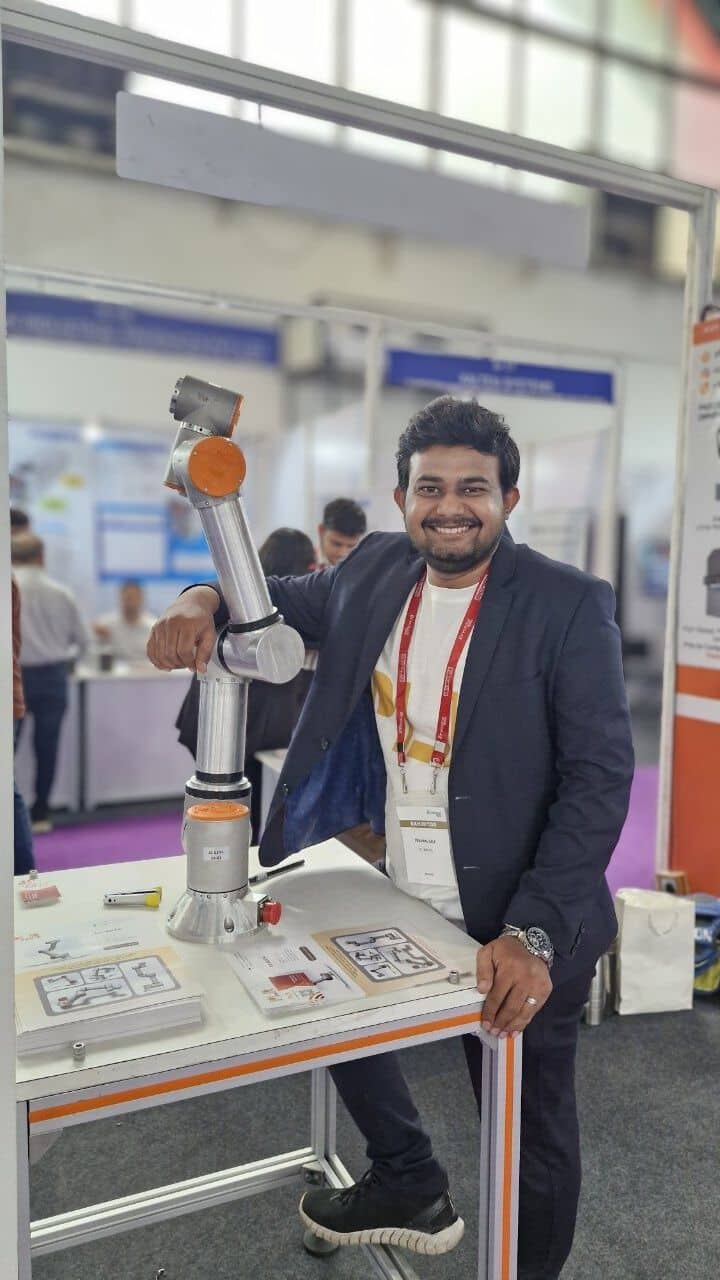
PL Robotics is emerging as a promising player in addressing India’s gap in industrial automation. Unlike many industries reliant on imported robotics, they are building true indigenous solutions specifically for Indian manufacturing needs. In exclusive conversation with Akanksha Sondhi Gaur from Electronics For You Prajwal A. Lale from PL Robotics revealed that they recognized that current imported automation systems often require manual intervention between machines, compromising productivity and efficiency. Additionally, India lacks a robust supply of high-precision mechanical components vital for advanced robotics, creating dependency on foreign imports and fragmented local suppliers.

To tackle these challenges, they developed their own collaborative robots (cobots) and automation systems, integrating software, hardware, and mechanical engineering uniquely tailored for Indian industries. Their approach focuses on user-friendly design, inspired by the simplicity of smartphones, reducing training time and expertise required to operate industrial robots. By leveraging open-source platforms and creating proprietary electronics like high-precision encoders with less complexity, they are paving the way for affordable, reliable, and scalable automation solutions.
What sets them apart is its innovative sensor integration, with force and torque sensors that ensure safety by immediately stopping the robot on contact. Their compact and miniaturized electronics further enable deployment in space-constrained factory floors common in India. They also offer flexible customization of robot end effectors including vision systems and specialized grippers to meet diverse application demands, from hazardous chemical handling to underwater inspections.
Looking ahead, they are expanding into advanced six-axis robots for complex welding and assembly lines, aiming to disrupt sectors such as automobile manufacturing currently dominated by foreign players. They are also working on humanoid robots, underwater cobots, and embedding artificial intelligence into their systems for smarter, more intuitive operation—envisioning an AI assistant that can guide operators interactively. This forward-thinking approach to indigenous, end-to-end robotic development—including design, manufacturing, and service—addresses critical supply chain gaps and empowers Indian manufacturers with cutting-edge automation capabilities.
The full interview, offering deeper insights into the science, applications, and business strategy behind this disruptive technology, will be published soon—stay tuned.


