What if implants like pacemakers or glucose sensors didn’t need batteries or surgery? Tiny antennas you can inject could power them through the skin.
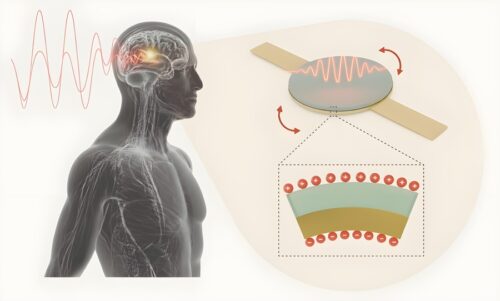
Credits:Image: Baju Joy
If you’ve ever thought about how pacemakers or implants for conditions like epilepsy and Parkinson’s get their power, it’s not as simple as plugging them in. Right now, most deep-tissue implants either use a battery that’s several centimeters long and needs surgery to replace, or a magnetic coil that works wirelessly but only at high frequencies. That can heat tissue and makes it hard to safely power tiny implants.
We’re seeing a new approach from MIT Media Lab. They’ve made an antenna about the size of a grain of sand that you could inject into the body. This tiny antenna can wirelessly power implants and generates 10,000 to 100,000 times more power than similar tiny metallic coils. The power comes from a magnetic field created by a device like a small wireless phone charger, which you could wear as a patch or keep near your skin.
“This is the next major step in miniaturizing deep-tissue implants,” says Baju Joy, a PhD student in the Media Lab’s Nano-Cybernetic Biotrek research group. “It enables battery-free implants that can be placed with a needle, instead of major surgery.”
Because the antenna uses standard microchip technology, we can integrate it with other electronics. The electrodes and circuits can be even smaller than the antenna and can all fit together during fabrication, letting the whole system be delivered through a needle. These antennas can be made at scale, and we could inject multiple ones if we need to cover a larger area.
It’s not just about pacemakers or neuromodulators. This could help with glucose monitoring too. There are already circuits with optical glucose sensors, but adding a tiny wireless power source could make them much easier to use inside the body. And because it’s built with familiar fabrication methods, we can combine it with other existing technologies without starting from scratch.