


A robot hand can feel finger bending and side-to-side movement in real time, helping it handle objects precisely and improving prosthetic hands and movement monitoring.
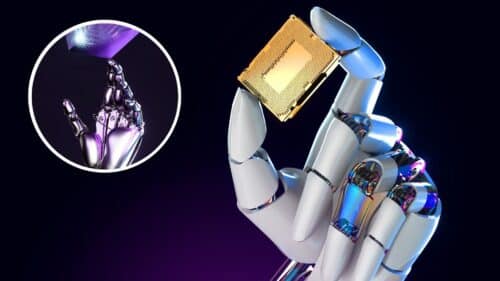
Researchers from Zhejiang University, Hangzhou Dianzi University, and Lishui University have demonstrated a humanoid dexterous hand that gives robot fingers a reliable sense of their own posture during complex motion. The system enables real-time perception of both flexion and side-to-side movement, improving control in delicate manipulation tasks.

The research team embedded a new omnidirectional soft bending sensor into the hand, allowing continuous posture sensing during multi-degree-of-freedom motion. The hand has 18 active degrees of freedom and five rigid-flexible fingers.
Each finger incorporates a soft optical sensor made from segmented PMMA (polymethylmethacrylate) fibers, along with a trichromatic LED and a chromatic detector.
The system operates by tracking how red, green, and blue light attenuate differently as the sensor bends. The fiber layout separates responses to pitch and yaw, allowing the system to decouple these motions instead of combining them. The design shows repeatable performance over 100 cycles, with RMSE values of 2.1%, 1.9%, and 3.2% across the three optical channels.

The sensor demonstrates stable and consistent performance in tasks such as using scissors, operating a computer mouse, and playing the piano. It addresses challenges in handling multi-degree-of-freedom motion and sensing posture in multiple directions in robotic hands.
A key feature of the soft sensor is its ability to provide real-time feedback. It detects multiple forms of mechanical interaction, including pressure, strain, and bending, giving robots a more detailed sense of touch compared to earlier systems. This is useful for tasks that require precision.
The technology improves the ability of robotic hands to perform precise manipulation tasks and supports further development of humanoid dexterous systems.
The technology has applications across several areas. In robotics, it can support complex manipulation with better control. In prosthetics, it can help develop artificial limbs that offer a more natural sense of touch, improving user control and comfort.
It can also be used in healthcare devices for movement monitoring and rehabilitation support. While the system is still under development, with ongoing work on durability and data processing, it marks progress toward integrating advanced tactile sensing into intelligent machines.