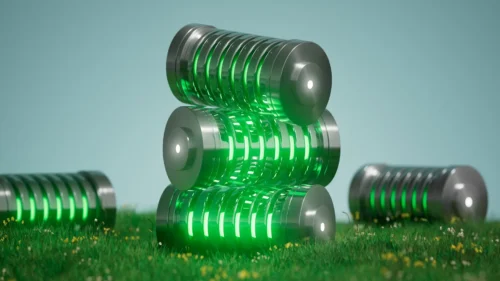
Imagine a battery can bend, stretch, and break down safely after use. It could power wearables and medical devices while cutting down electronic waste.
Battery waste from wearable devices and medical implants is a growing problem, creating an urgent need for sustainable alternatives. Researchers at McGill University’s Trottier Institute for Sustainability in Engineering and Design have developed a new eco-friendly battery that could power these devices while safely decomposing in the environment.
The battery is made from citric acids, gelatin, and biodegradable metals, replacing heavy-metal electrodes commonly used in conventional batteries. Magnesium and molybdenum, often used in biodegradable battery concepts, degrade more easily than heavy metals but typically show lower performance. Previous magnesium-based designs faced a barrier layer on the metal that reduced voltage and battery life. To overcome this, the team used naturally occurring citric and lactic acids mixed with gelatin, preventing the reaction-blocking layer and improving both output and longevity.
To make the battery flexible, the acids were suspended in gelatin, creating a soft, stretchable electrolyte. The battery was then cut in a kirigami pattern, a geometric design that allows materials to expand and twist without tearing. This structure enables the battery to stretch up to 80 percent without losing performance.
In testing, the battery powered a pressure sensor, delivering about 1.3 volts—slightly below a standard AA battery but sufficient for wearable electronics. The design is suited for soft wearables, implantable medical devices, and flexible IoT sensors.
The researchers are now seeking industry partners to advance the technology, with goals to miniaturize the battery for implants, enhance performance, and integrate it with fully biodegradable circuits. The work addresses the growing problem of electronic waste by providing a sustainable alternative to traditional batteries, offering both functionality and environmental benefits.