Many beginners have a notion that programming an Arduino makes them embedded engineers. But real skills start much deeper. Have you ever asked yourself whether you are just coding or truly building embedded systems?
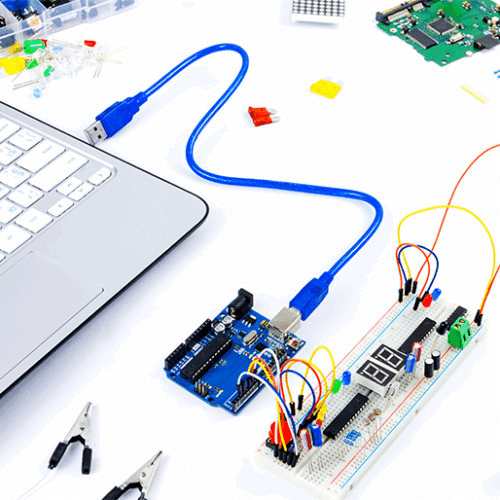
When someone asks, “What does it mean to be an embedded systems engineer?” The question often comes with a follow-up: “If I can program an Arduino board and build a small project, does that make me an embedded systems engineer, or am I just a software developer?” Understanding the answer requires first examining what embedded systems truly are and the skills an engineer in this field needs.
At its core, an embedded system is any product or device that combines both hardware and software to perform a specific function. An embedded systems engineer is someone capable of designing, building, and programming such products. The complexity of these systems can vary widely, ranging from simple applications like timers or attendance monitoring systems to highly complex systems, such as smart city solutions or electric vehicles. The level of expertise required depends on the complexity of the system that is being built.
In a recent conversation with Maaz Jukaku and Jayakumar Balasubramanian from Emertxe, we explored the importance of learning Arduino for entering the industry as an embedded systems engineer. “For beginners looking to enter this field, the barrier to entry today is relatively low, thanks to platforms like Arduino and various simulation tools. These tools enable anyone to gain hands-on experience in building small embedded systems. However, programming an Arduino alone is not sufficient to be considered a professional embedded systems engineer. It serves as a starting point for learning the principles of the domain,” explained Maaz.
The next step in developing true embedded systems skills involves transitioning to bare metal programming, where one works directly with microcontrollers such as STM32 or ARM Cortex-M series chips. This stage requires a deeper understanding of communication protocols and the ability to design real-world products around the hardware. Depending on the application, whether automotive, medtech, consumer electronics, or industrial automation, engineers may need specialised knowledge tailored to that domain.

“At this level, strong programming skills in C and a solid understanding of algorithms become essential. This foundation enables engineers to design, build, and maintain reliable, efficient, and scalable embedded systems. Starting from basic Arduino projects and progressing to bare-metal programming allows learners to gradually gain the expertise required to tackle increasingly complex systems, ultimately defining themselves as true embedded systems engineers,” said Jayakumar
Learning Arduino is a good first step, but it is only the beginning. To become a real embedded systems engineer, one needs to understand how hardware and software work together, learn how to program actual microcontrollers, and build real products. As one moves from small projects to more advanced ones, one’s skills grow, and that is what finally makes one an embedded systems engineer.