What if every college, startup, and village could join India’s science and technology revolution? Prof. Ajay Kumar Sood, in conversation with EFY’s Vidushi, outlines the mission to make innovation a truly citizen-led movement.
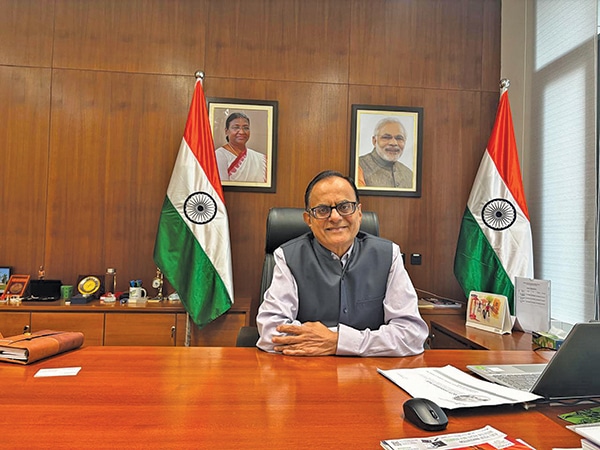
Q. Could you explain the core role of the Office of the Principal Scientific Adviser to the Government of India?
A. The Office of the Principal Scientific Adviser (PSA) guides and oversees the science and technology policy framework of the country. It addresses issues across all areas of science and technology, with a focus on both science for policy and policy for science. The office engages with key stakeholders across academia, industry, startups, and government.
Its main objective is to identify and recommend policy measures to strengthen India’s technological capabilities and enhance technology sovereignty.
Q. How does the Office of the PSA work?
A. We work for the government, but our role is distinct. We connect government, academia, industry, and startups. This four-way engagement underpins the functioning of our office. We support and coordinate across these sectors because we do not belong to any single ministry. Instead, we work with ministries wherever science and technology interventions are required.
The office maintains strong links with governments, as all PSAs are embedded within their respective national administrations. At the same time, it engages with a wide range of stakeholders beyond government. In that sense, our office operates across the full science, technology, and policy ecosystem.

Q. What are the main arms through which the PSA’s office operates, and how do they contribute to India’s science and technology landscape?
A. The Office of the Principal Scientific Adviser operates primarily through two key bodies: the Prime Minister’s Science, Technology and Innovation Advisory Council (PM-STIAC) and the Empowered Technology Group (ETG).
Under PM-STIAC, several national missions have been conceptualised, including the National Quantum Mission, which is implemented by the Department of Science and Technology with continued strategic support from our office. Other major initiatives include the One Health Mission, which links human, animal, and environmental health, along with missions focused on green hydrogen, artificial intelligence, and semiconductors.
Through these efforts, the Office of the PSA strengthens India’s science and technology ecosystem, drives innovation, and builds national capabilities in critical areas, ensuring that scientific progress supports sustainable and inclusive development.
Q. What is the process once a new national mission is conceptualised under the PSA’s office?
A. These missions aim to make India future-ready in critical and emerging technologies while ensuring that the benefits of innovation reach end users across the country. All stakeholders are engaged throughout the process, though implementation rests with the respective ministries.
Once a mission is conceptualised and approved, it is developed in close collaboration with the relevant ministry for implementation. This inclusive approach enables academia, industry, startups, and government bodies to contribute their expertise and collectively advance technology, innovation, and national capacity-building.
Q. What is your view on the rare-earth metals challenge that India faces?
A. India is actively addressing the challenge of rare earth elements with the goal of becoming self-sufficient, or Aatmanirbhar, in this critical area.
Rare earth elements are not truly rare, but their extraction is complex and technology-intensive. In India, this work is led by India Rare Earths Limited (IREL) under the Department of Atomic Energy, which extracts rare earth oxides from monazite sands, a process that has been ongoing for many years. Earlier, the focus was on thorium and uranium, but rare earths have now become equally important.
IREL has developed the capability to extract both light and heavy rare earth oxides, including those used in permanent magnets such as neodymium and praseodymium. India currently produces about 1500 tonnes of rare earth oxides annually.
The next step involves converting these oxides into metals and alloying them with iron and boron to produce rare earth magnets. This entire technology chain has been developed domestically, and several Indian companies are preparing to manufacture these magnets using domestically sourced materials. While this marks a significant achievement, production capacity must expand to meet growing demand from electric vehicles, wind energy, and electronics.
At the same time, India is investing in rare-earth-free permanent magnets that achieve high magnetisation without using rare earth elements. Some Indian companies already produce these magnets, which, although slightly larger, are cost-effective and reduce dependence on imports.
Overall, India’s efforts are well underway to achieve technological self-reliance and global competitiveness in this strategically vital field.
Q. Let us start with one of your major initiatives. Which one would you like to discuss first, and what makes it particularly significant?
A. I would like to shed light on the Manthan initiative, launched on 15 August 2022. It is a platform that connects research, academia, industry, startups, and government on a common stage. Manthan bridges those presenting technology-related problem statements with those capable of solving them, including researchers, startups, and companies. Beyond hosting problem statements online, the platform involves active consultation and guidance to ensure meaningful and impactful collaborations.
In just over three years, projects worth approximately `87 billion have been initiated, with over `15 billion transacted, much of it directed to startups and academic institutions. The platform has also led to the creation of several Centres of Excellence.
At its core, Manthan seeks to unite the ecosystem to address societal challenges and has even drawn international participation, fostering global innovation for the public good.
Q. So who exactly can use the Manthan platform, and how can a common person make use of it?
A. To start using Manthan, participants must register on the platform to verify their authenticity. Users can then participate either on the supply side or the demand side.
The supply side includes those offering solutions, such as academic and research institutions, startups, grassroots innovators, and private organisations with innovative technologies or ideas. The demand side includes those seeking solutions, such as large corporations, PSUs, government departments, state agencies, philanthropists, and foundations working in areas such as healthcare, waste management, and rural development.
All participants are verified to ensure authenticity and prevent misuse. The Manthan team facilitates collaboration by connecting partners and supporting them through a transparent, well-managed process that safeguards privacy and integrity.
Q. Once an idea is submitted on the Manthan platform, what kind of support is provided, such as funding, mentorship, or validation?
A. Manthan does not provide direct funding, fellowships, or financial support. Its primary role is to connect those facing societal challenges with individuals or organisations that have the capability or technology to address them.
Once a collaboration is established, the participating parties determine the terms, including deliverables and funding arrangements. So far, projects worth over `15 billion have been executed through such partnerships, demonstrating that real transactions and implementation take place through direct agreements between participants.
Q. Is there any initiative that focuses on Tier 2 and Tier 3 colleges in India?
A. To ensure that innovation is truly inclusive, the UTTHAN was launched under the Manthan platform. While Manthan allows anyone to propose or solve problems, initially most projects were taken up by premier institutions such as IITs and IISc, which already had strong reputations and resources. This limited opportunities for many capable colleges in smaller cities.
UTTHAN was created to bridge this gap by empowering Tier 2 and Tier 3 institutions and integrating them into the national innovation ecosystem. The initiative focuses on building capacity through exposure, mentorship, and partnerships, enabling these institutions to compete effectively and contribute meaningfully to technology development.
Experienced industry partners collaborate with these colleges to guide them in developing strong project proposals, executing impactful research, and delivering practical solutions. UTTHAN is helping create a more balanced innovation landscape, ensuring that talent and ideas from across India contribute to the country’s scientific and technological advancement.
Q. How do you bring startups, industries, and innovators together, particularly in Tier 2 and Tier 3 colleges?
A. To connect startups, industries, and innovators effectively in Tier 2 and Tier 3 colleges and universities, we have established MITTI Innovation Hubs.
MITTI stands for Manthan, International Federation of Inventors’ Associations, Industries, Tier 2 and Tier 3 Colleges, Technologies, and Innovation. It is an integrated hub for research, innovation, startup incubation, pilot projects, and investor engagement, serving as a single platform that connects startups, industries, investors, and research institutions across India, including smaller towns and semi-urban areas.
MITTI supports the full innovation cycle, from idea generation to commercialisation. Its objective is not only to promote strong ideas but to help convert them into products and solutions that address real societal needs. Through MITTI, startups can test ideas through pilot projects, gather real-world feedback, and connect with industry partners and investors to scale their solutions.
The hub also emphasises mentorship and capacity-building, offering guidance from experienced experts across sectors. Ultimately, MITTI aims to improve the success rate of Indian startups by providing a complete support ecosystem from discovery to market readiness, bridging the gap between innovation and implementation.
Q. What are the Rural Smart Village Centres, and how do they function at the village level?
A. The Rural Smart Village Centres (RSVCs) bring technology and innovation directly to rural communities, ensuring that advancements reach farmers at the grassroots level.
Each 1000sqft (92.9sqm) centre showcases technologies from the RuTAG programme and other initiatives, offering live demonstrations and hands-on guidance. RSVCs operate across twelve verticals, covering areas such as agriculture, livelihoods, and education, and provide services including satellite-based farming advice and rapid soil testing.
By using these affordable machines and technologies, farmers can increase productivity while saving time and reducing costs. The centres also support villagers in accessing government schemes related to agriculture, education, and assistive technologies.
Set up with private support, RSVCs are designed to become self-sustaining through nominal service fees.
Q. How do your initiatives aim to empower women and strengthen their role in India’s science and innovation ecosystem?
A. Our initiatives aim to empower women by strengthening their presence and leadership in India’s science and innovation ecosystem. One such initiative is the Women in STEM programme. This key initiative focuses on increasing women’s participation and retention in science, technology, engineering, and mathematics.
India already has a strong base, with about 44 per cent of women in STEM up to the postgraduate level—one of the highest rates globally. However, participation drops to around 24 to 26 per cent beyond the postgraduate level, as many women leave the system due to social, professional, or personal factors.
The programme seeks to address this gap and ensure that trained women professionals continue contributing to science and technology.
To achieve this, multiple departments, including the Department of Science and Technology, the Department of Biotechnology, CSIR, and ICMR, have launched dedicated initiatives such as the KIRAN programme.
Under the Manthan platform, the Office of the Principal Scientific Adviser has introduced complementary efforts that recognise and support women in STEM. These include publishing coffee-table books on women achievers in science, hosting lecture series with institutions such as IIT Delhi, and partnering with philanthropic organisations to mentor and sponsor female students from rural backgrounds pursuing STEM education.
The broader goal of the Women in STEM initiative is to empower women as scientists, innovators, and leaders across disciplines. The current focus is on providing sustained support, mentorship, and opportunities for women already within the STEM ecosystem to grow and lead.
Q. How are you ensuring long-term sustainability and meaningful impact for the Manthan initiative?
A. Let me illustrate this with the RSVC initiative about which I talked earlier.
Launched about a year ago, RSVC focuses on bringing affordable and sustainable technologies to rural areas. It builds on the earlier RuTAG (Rural Technology Action Group) programme, under which seven IITs were tasked with developing technologies for rural needs. So far, 64 technologies have been developed, addressing challenges related to livelihoods, water management, and agriculture.
The next step involved scaling these solutions, which is where RSVCs come in. Each centre, managed by local communities and funded privately, typically serves around 50 villages.
Designed to be self-sustaining, RSVCs generate income through services such as rapid soil testing, which now delivers results within hours rather than days. The objective is for each RSVC to become self-sufficient within a few years. With NABARD as a key partner, 50 centres have already been established in the first year without government funding.
The next phase aims to expand this network further through partnerships and collaboration. This model ensures both sustainability and large-scale impact by combining local empowerment, private participation, and scalable frameworks capable of reaching every part of the country.
Q. Where can one find information or listings of the existing RSVCs?
A. Details of established RSVCs are available on the Manthan platform under the RSVC-AMRIT section. This section provides information on each RSVC, along with photographs of the respective centres.
Q. If an organisation is interested in establishing an RSVC, what process should be followed and whom should they contact?
A. Any NGO, foundation, academic institution, or CSR entity interested in establishing an RSVC may submit an expression of interest along with a concept note via email to [email protected] and register on the Manthan platform to initiate the RSVC set-up process.
Q. Could you elaborate on NABARD’s role in this initiative and the institutional support it provides to RSVCs?
A. NABARD plays a strategic enabling role in the RSVC initiative through the following key verticals:
- Technology sandboxing: Identification, validation, deployment, and acceleration of technologies for RSVCs based on identified problem statements.
- Monitoring and evaluation: Through the RSVC-AMRIT platform, NABARD monitors RSVC establishment, technologies deployed, and impact generated in terms of skilling, livelihoods created, productivity gains, income enhancement, and entrepreneurship development.
- Market linkages: Facilitated through ONDC, the National Rural Livelihood Mission (NRLM), the Ministry of Rural Development (MoRD), and other agencies.
- Identification and engagement with implementation partners: Assessing experience, institutional strengths, community engagement, and technology proficiency.
- Capacity building: Development of training modules for RSVCs, Self-Help Groups (SHGs), and Farmer Producer Organisations (FPOs).
Q. What is the long-term vision for RSVCs, and how many centres are planned over the next five years?
A. By 2026 end, RSVCs are expected to scale to over 150 centres. Over the next five years, we envision establishing more than 500 RSVCs across the country, creating a nationwide network for rural technology deployment, employment generation, and entrepreneurship development.
Q. For young innovators and entrepreneurs following this conversation, what message would you like to share?
A. This is a defining moment for India. There has never been a better time or place for innovation and entrepreneurship. Be bold. If you have ideas, passion, energy, stamina, and perseverance to take on challenges, step forward and pursue them.
The government has created strong frameworks, resources, and policies to support innovators, with further initiatives underway.
Under the leadership of Prime Minister Modi, technology is central to India’s growth narrative and to the vision of Viksit Bharat. In successive Independence Day addresses, the Prime Minister has emphasised the importance of innovation. The call of Jai Jawan, Jai Kisan, Jai Vigyan, and Jai Anusandhan reflects the nation’s enduring commitment to research and discovery.
Through this platform, it is also important to highlight an upcoming step—the implementation of the `1 trillion corpus for research and development. This fund is focused on supporting private sector-driven R&D and complements the Anusandhan National Research Foundation, which supports academia-led research.
Together, these two major initiatives, one industry-driven and the other academia-driven, will help create a robust and balanced innovation ecosystem. For young people, there could not be a better time to dream, create, and lead the future.