
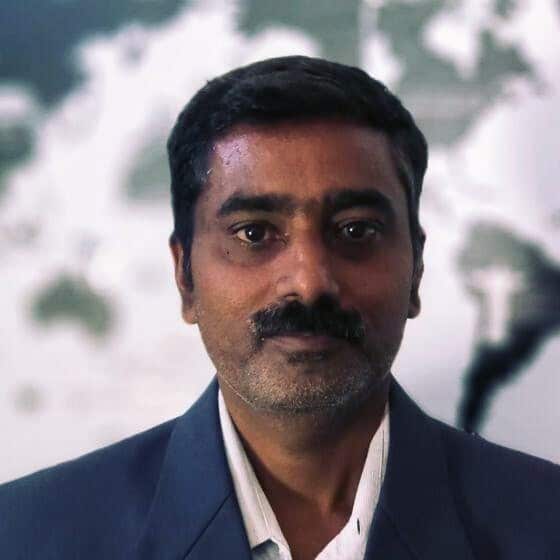
From rice mills to farms, IoT devices from a Karnataka startup are transforming data into smarter decisions through AI, cloud dashboards, and voice guidance. How is this possible? Ananth S. Kulkarni of Hexitronics tells their story of empowering small businesses through these devices to EFY’s Nidhi Agarwal.
Q. What does your company do?
A. We design and manufacture IoT (Internet of Things) devices, which now also serve as data sources for AI systems. Our devices are tailored to different use cases, delivering solutions for our customers. Currently, our clients are primarily small and medium-sized enterprises, such as rice mills and stone-crushing units, that require remote monitoring for their operations.
Q. Do you make your own products or only make them for clients as needed?
A. Earlier, we worked with clients on specific use cases because our products could not be produced in advance. But with our own architecture, we can now create them before a client even approaches us. The products are now universally configurable and usable across different use cases. We are also looking for distributors across India.
Q. Can you explain your architecture and the products you offer?
A. Our architecture consists of two parts. One is an IoT gateway device called NodeX, and the other is AutoStack, our own cloud platform. The gateway can connect to various factory sensors, such as moisture sensors, conveyor motor temperature sensors, energy meters, programmable logic controllers (PLCs), or variable frequency drives (VFDs), and collect data at set intervals. The data is then sent to our cloud platform, AutoStack, which automatically generates dashboards when the devices are switched on for the first time.
Q. What do you mean by AI devices?
A. In large factories, like cement plants, production spans multiple departments managed by supervisors who coordinate through meetings or urgent calls. The process relies heavily on human intervention to meet targets. With AI, sensors collect real-time data such as motor speed, conveyor speed, and temperatures, and ERP feed it to a backend. AI analyses these parameters, identifies trends, and recommends precise actions, such as adjusting conveyor speed to boost output. Such optimisation is complex to achieve manually and can now be paired with voice assistants for easier interaction. A practical example is agriculture, where farmers often struggle with seed and pesticide choices. Voice-assisted AI guides them on natural pest control, seed selection, and timely actions based on crop and weather conditions. It can also connect to soil-testing sensors, discuss soil health, and suggest measures to improve it. Similar AI assistants can support students, teachers, journalists, and lawyers, enabling faster decisions, better guidance, and higher productivity.
Q. When you say you are integrating AI into an IoT device, where exactly are the AI models running?
A. The AI models run on the cloud. The sensors send data to the gateway, which forwards it to the cloud, and the dashboard shows the output. Different AI architectures exist depending on the business goal. If the aim is revenue, the approach can be similar to services such as Perplexity. If the aim is solving real-world problems, an agent-style AI is used. In this setup, the edge device such as a phone, laptop, or Raspberry Pi calls an API from a server hosting an LLM such as GPT, Claude, Gemini, or DeepSeek. The response from the model is then converted into voice on the local device, letting it act like any persona the user chooses.
Q. How do you differentiate yourself from other companies building IoT and AI-enabled devices?
A. Hexitronics stands out by bringing all essential skills together. We carry hardware design, manufacturing, cloud services, data hosting, analytics, and AI integration, all under one roof. Most firms offer only one or two of these pieces, but we provide the entire stack. Also, we offer our IoT cloud services free of cost, with no subscription fees for customers.
Q. Who are your target customers?
A. The target customers are MSMEs such as rice mill owners, crusher plants, food processing units and small manufacturing units. This includes people who run a few CNC machines and take up machining jobs as vendors for larger companies. They want to track efficiency, find weaknesses, and improve operations. IoT devices help them get these insights end-to-end.
Q. What is your approach to prototyping a new industrial IoT solution?
A. Prototyping an industrial IoT solution requires patience and close collaboration with the client, especially during proof of concept stages. Field conditions often introduce challenges that are not evident in lab testing. For example, in a project with a gas outlet client that provides SaaS for LPG auto-rickshaws, we deployed 400 devices over a three-month POC. Issues included field noise, limited network availability, and hardware interactions, such as gas dispensers’ motherboards sharing data with our IoT device, which then feeds the client dashboard via MQTT. Environmental factors, such as power line noise from diesel generators affecting communication lines, caused data errors. These misinterpreted data points must be filtered or the hardware redesigned because accurate data is critical for AI-driven decisions. While simulations and lab tests often work perfectly, the real challenge arises in dynamic field conditions.
Q. How are electronics involved in your product, and what microcontrollers or hardware do you use?
A. The choice of hardware depends on the client’s requirements, budget, and the criticality of the data being handled. We evaluate data sensitivity for decision-making and safety, then select the microcontroller accordingly. In noisy environments, we design circuits with EMC and EMI compliance to reduce interference. Data is also validated at the gateway, which filters noise by comparing incoming data against average values to ensure accuracy before forwarding it. For most applications, we use ESP32-series microcontrollers, including ESP32 cameras, for tasks such as monitoring and surveillance. ESP32 supports various modules, such as Quectel and Qualcomm and is easy to code. For more computationally intensive tasks, we use Raspberry Pi models such as the Raspberry Pi Zero, Zero W, or Pi 4, depending on processing and RAM requirements. The hardware choice is always tailored to the use case.
Q. How do you decide whether to use an off-the-shelf module or build a custom solution for a hardware design?
A. The choice depends on the sensor or electronic component being integrated, such as PLCs, VFDs, energy meters, HMIs, or displays. Each device has specific output ports such as RS-485, RS-232, Ethernet, CAN, or Profinet. Our boards already have predefined footprints for various modules. Based on the customer’s equipment and communication needs, we select the appropriate pre-manufactured module, called a ‘feather’, and assemble it on the board.
Q. Where and how do you manufacture your PCB and hardware, and how do you handle assembly and enclosures?

A. We manufacture our PCBs ourselves using a desktop SMT machine that can produce up to 2000 cards per day. Some PCBs we source externally from Line Circuits. We assemble all boards on our SMT machine and test each card in our lab before placing it in an enclosure. Early on, low-volume enclosures were expensive in India, so we laser-cut plates ourselves. We now use standardised enclosures from Italtronic, sold by Mechpower in Gujarat, that fit all our cards.
Q. How do you perform end-to-end testing of a device, including hardware, cloud, and dashboard, before deployment?
A. We use two test stations with laptops. One laptop connects directly to the hardware via a serial monitor using IDEs such as Arduino IDE or Espressif IDF. The programme is loaded onto the chip and monitored. The second laptop connects to the dashboard through Node.js and our tech stack. Each device has a unique ID that is entered into the dashboard to generate data. We then connect lab sensors such as energy meters, DG controllers, or PLCs physically to the hardware to fetch real-time data. This allows us to monitor the microcontroller, the programme, and device behaviour, debug any issues, and ensure the system works end-to-end before deployment.
Q. How do you implement safe OTA updates in IoT devices, and what are the limitations with different network options?
A. OTA updates are possible with ESP32 when it is connected to Wi-Fi. In an IoT setup, the microcontroller collects sensor data, processes it, and sends it to the cloud over a network module, typically Wi-Fi. If Wi-Fi is unavailable due to corporate restrictions or privacy concerns, alternatives such as Ethernet or cellular modules, such as the EC-200, can be used. In the case of cellular modules, the ESP32 communicates with the module to send data to the cloud. However, OTA updates require a direct internet connection, which works reliably over Wi-Fi.
Q. How do you ensure security in cloud-connected industrial devices?
A. Security in cloud-connected industrial devices is ensured through multiple layers. Data is encrypted, especially when communicating with enterprise systems such as SAP, to prevent errors or corruption. MQTT brokers secure data in transit using protocols such as TLS and SSL. For highly sensitive applications, blockchain can provide additional security, though it increases costs. However, for most industrial IoT sensors, such as temperature sensors, basic protocols such as HTTP and MQTT provide sufficient security.
Q. What design challenges did you face while building AI-enabled devices?
A. The main challenge was getting the AI to give reliable and meaningful responses. When we first built the farmer assistant, it often produced irrelevant answers, so we trained it to understand the appropriate tone, context, and usefulness for real users. Another difficulty came from the API side: different AI models and providers are still evolving, and their APIs do not always behave consistently, which affects the final product’s performance. For devices such as Akiva that also use a camera, the complexity increases. The system must analyse plant images, identify the plant and its condition, understand user feedback, and then recommend the appropriate solution, starting with natural remedies unless chemicals are specifically requested.
Q. What challenges did you face while moving from pilot development to mass deployment?
A. We faced several challenges while moving from pilot development to mass deployment, mainly because we had to learn everything from scratch. Our journey started during COVID-19 when a client brought us a failed IoT device from China. That pushed us to explore hardware, cloud systems, backend software, and even basic web technologies. In the early days, it took us 15 days to configure a single device, and we built our first PCBs in our garage. With time, better vendors, and the support of my brother, who left BARC to join this mission, we improved quality and deployed our first large batch of 300 devices for an ice cream supply chain. This helped us demonstrate the value of our monitoring solutions across freezers and energy systems, and in diagnosing issues in Siemens VFDs. The biggest challenge came when we realised we could not scale if each device needed a fresh PCB, a new dashboard, or a new proof of concept. We created an auto-stack system that enables devices to generate their own dashboards and be deployed straight from the shelf. This standardisation helped us reduce deployment time, file for patents, and prepare for nationwide large-scale distribution.
Q. What is the expected lifespan of your remote monitoring IoT devices, and how do you handle battery and hardware issues?
A.The circuitry in our devices, such as water meters, can last a very long time, sometimes 10 to 15 years if the field conditions are ideal. However, the main limiting factor is the battery, which typically lasts about 3 years. High-frequency or severe lightning can also damage devices, as no protection entirely prevents it. To address battery limitations, we use larger lithium-ion battery banks in metal enclosures, allowing devices to run for up to five years. We provide a one-year warranty and, after that, charge a nominal fee only for replacements or repairs.
Q. How does your company handle team structure, app development, and hardware training?
A. Our company works with a small team and also outsources app development to learners, such as a BCA student, paying them per app. The student provides a basic app structure, and we refine and polish the code. For hardware, we handle everything in-house. We also offer a one-week on-the-job training program that teaches participants PCB design and SMT machine operation while they help us complete our projects.
Q. Are you receiving any government funding for prototyping, and have you applied for relevant programmes or challenges?
A. No, we are not currently receiving government funding. We tried applying to Elevate from Karnataka early on and placed third that year, but realised that winning requires more than just innovation. We needed certain partners, but we could not find them. Recently, we applied for the National Startup Awards (NSA) 5 and participated in multiple challenges organised by the Confederation of Indian Industries, including the Blue Star challenge and energy distribution challenges, but we have not been shortlisted so far.
Q. How do you handle manufacturing and outsourcing across your products, and how is your company expanding into different areas?
A. We do not do everything in-house. We continue to outsource PCBs, while for utilities such as energy and water meters, we work with our sister company, Padmashakti IoT Technologies, which handles assembly lines for water meters and retrofits smart energy meters. All devices can be hosted via Auto Stack or government clouds. We are also expanding into other use cases, such as connecting soil moisture sensors and soil-testing labs to deliver actionable crop guidance. Hexitronics remains the parent company, supporting these branches, including Akiva for field assistance and Akiva Pro for professionals, to expand into AI-guided apps and solutions.
Q. How is your ecosystem helping you right now?
A. We initially explored collaborations with academies, but they operate differently. Their timelines and priorities do not align with ours. So, for now, we are focusing on distributors. We plan to meet distributors in person across India, support them with our technical team, and scale our infrastructure alongside them. As the network grows beyond what we can manage directly, we will partner with service providers to extend our reach.
Q. How has your company’s revenue and unit sales evolved over time, and what is the current potential for scaling up?
A. Initially, from 2018 to 2019, we were in the negative, investing heavily in research, modules, PCBs, chips, and servers without generating profit. By 2019, our balance sheet improved from a negative ₹1.2 million to a positive ₹600,000, although revenue was inconsistent. With our Auto Stack and Nodex solutions integrated, we can realistically sell approximately 1000 units per month. Our devices are plug-and-play: once switched on, they automatically send data to the cloud and generate dashboards without manual setup. We are currently seeking loans from SBI and the Central Bank to fund this growth.
Q. What challenges is your startup currently addressing to achieve rapid growth, and how are you overcoming them?
A. The main challenge we faced was funding. An investor, Padma Shakti, recognised the scalability of our idea to combine Node X and Auto Stack for energy and water meters. He invested and leveraged his network to help us: he took our samples to Delhi, engaged with Jal Shakti officers, and secured two states as pilot sites for water meters. Our integrated approach, handling cloud, devices, warranties, and deployments as a single entity, stood out compared to other companies offering fragmented solutions. This impressed clients and officers, and after successful demos, our scaling efforts have accelerated significantly.
Q. What are your plans for future growth? Are you investing in people, marketing, or equipment?
A. We will not hire a marketing or sales team. Instead, we will work through distributors, offering them the best prices for our gateways and making them partners, not just sales agents. Drawing on my experience at ITC, I have found that strong networks are built by empowering partners and strategically leveraging key products. Distributors will promote our gateways using demo kits and technical materials, and we will share profits with them. This approach ensures market penetration without directly managing a sales team.