A battery free wound dressing changes color and wirelessly sends health data before diabetic ulcers become severe enough for amputation risks. How?
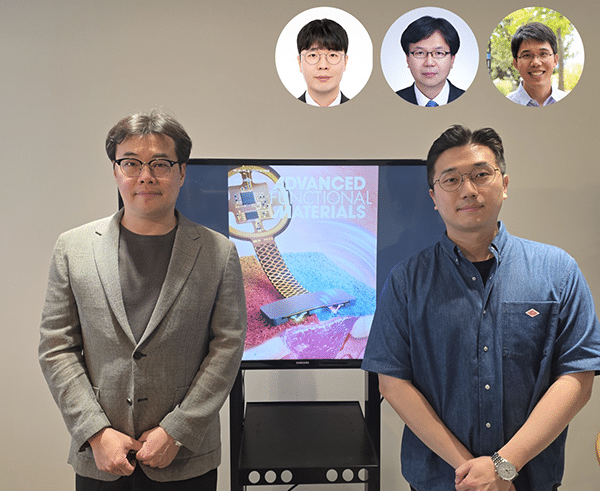
Researchers at Korea Advanced Institute of Science and Technology (KAIST), working with collaborators from Hanbat National University, Korea Institute of Machinery and Materials, and California Institute of Technology, have developed a wireless smart dressing patch that monitors diabetic wounds in real time, aiming to detect early warning signs that can lead to complications such as tissue damage and amputation risk.
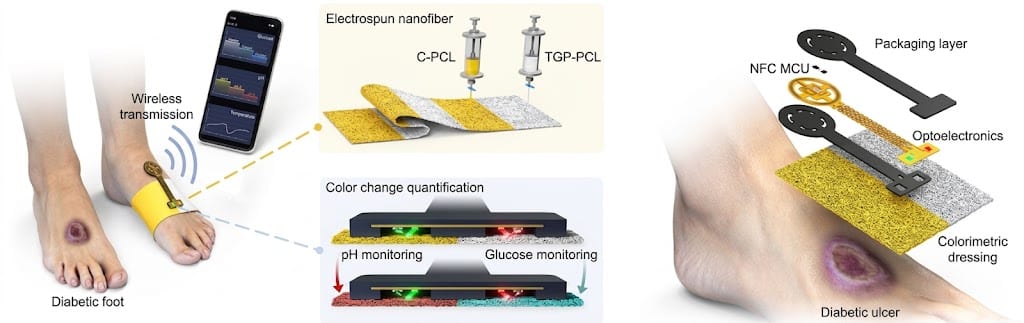
Diabetic ulcers are among the most serious complications in diabetes care, often worsening when left untreated or undetected. The new patch integrates a functional wound dressing with optoelectronic sensors that simultaneously track glucose levels, acidity, and temperature at the wound site. Patients can access this data through a smartphone without invasive testing or hospital grade equipment.
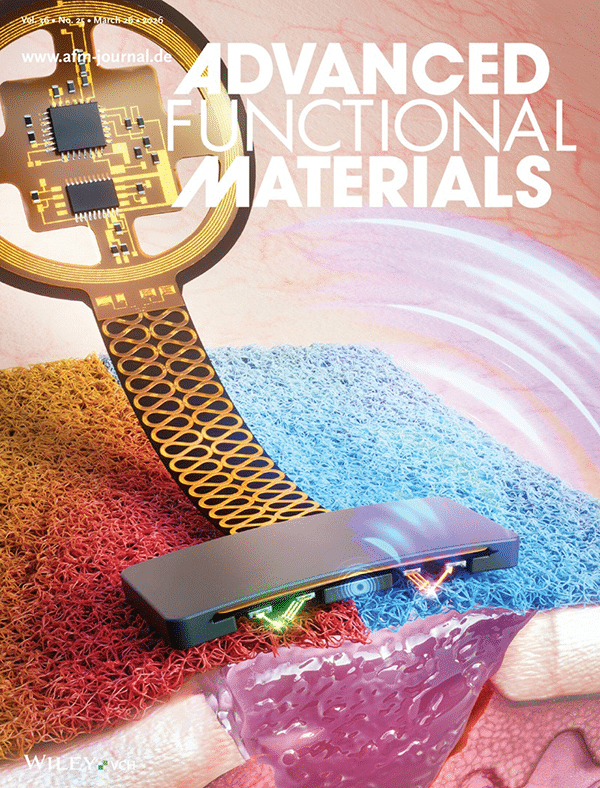
The system combines visual and electronic sensing in a single platform. A nanofiber based dressing created using electrospinning changes color in response to worsening wound conditions such as rising glucose or pH imbalance. These visible changes provide an early warning signal for patients and caregivers before the condition becomes severe.
To improve accuracy, the patch uses LEDs and photodiodes that convert colour changes into optical reflectance signals and then into electronic data. Unlike camera based systems, this method is less affected by ambient lighting, resulting in more stable measurements. The device is also battery free, operating through near field communication technology that draws power wirelessly from a nearby smartphone.
Distinguished Professor Inkyu Park stated, “Research that began to reduce the pain of diabetic patients who have to prick their fingers with a needle every day has led to a technology for the preemptive diagnosis of complications,” adding, “This technology will become a core platform technology that can be expanded in the future to blood-free diagnostic technologies not only for diabetes but also for various chronic diseases.”