

Turning crop residue into power, a new battery is promising lithium-level performance, safer charging, lower costs, and full biodegradability! Can this innovation reshape clean energy? Speaking to Nishita Baliarsingh of Nexus Power, Nidhi Agarwal from EFY explores the possibility.
Q. When did you start your startup? What inspired you?
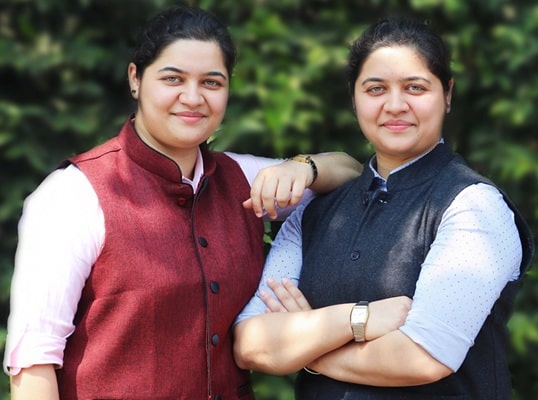
A. We officially began in August 2020, though the idea came up in late 2019 during a late-night conversation between my identical twin sister, who is one of the co-founders, and me. We were both interested in sustainability and wanted to do something for the environment. While exploring the electric vehicle (EV) market, we realised that batteries are a significant component, but not very sustainable. They use scarce materials, can be hazardous, and sometimes catch fire. High battery costs also drive up EV costs. We decided to focus on battery technology and started researching safer, more abundant alternatives. That led us to develop batteries from natural biomaterials, including crop residue, thereby addressing environmental issues such as air pollution from crop burning. During the 2020 COVID-19 lockdown, our first home experiment successfully produced a 5V cell, confirming the concept.
Q. What is the idea behind the name Nexus Power?
A. Well, ‘Nexus’ means connection or putting things together, which mirrors how we connect multiple cells to build batteries for EVs and grid storage, producing more sustainable energy solutions.
Q. Could you share what kinds of batteries you are developing, the applications they are designed for, and the industries or users you are primarily targeting?
A. We make rechargeable batteries that can replace lithium batteries. In principle, anything that uses rechargeable batteries could use ours. Still, we are primarily focusing on EVs, including two-wheelers, three-wheelers, four-wheelers, and golf carts, as well as stationary energy storage systems such as those used in solar or wind plants. We operate exclusively business-to-business (B2B), selling our batteries to original equipment manufacturers (OEMs), not directly to consumers.
Q. Can you name any customers currently using your batteries?
A. The batteries are still in pilot trials and market tests, not commercial sales, as certifications and licensing are pending. While specific names cannot be shared, there are several companies across the country participating in these trials and tests. We are not generating any revenue commercially from our customers.
Q. Do you have your own manufacturing facility, or do you outsource production?
A. We have a pilot manufacturing line at our headquarters in Bhubaneswar, where we handle material synthesis and cell layering. We also rent additional lab and equipment space nationwide to accelerate production. We plan to scale up this line in the next three to four months.
Q. How is your team structured? Do you have separate teams for R&D, design, and other functions?
A. The team is small, about 30 to 40 people. One major group is research and development (R&D), which handles material synthesis, applications, and testing, primarily involving PhD and postdoc scholars. There is a design team for packaging, layering, and cell modelling. The team also includes finance, HR, and a few people in brand management and marketing.
Q. Have you received any government support or incentives for your startup so far?
A. We began with grants from the governments of India and Odisha, including Startup Odisha, and received support from the Ministry of Electronics and Information Technology (MeitY), the Department of Biotechnology (DBT) and the Biotechnology Industry Research Assistance Council (BIRAC). We later raised equity from 2022 onwards. Government support continues through PSU collaborations for testing and trials and projects with state departments, though we are not fully dependent on policy support.
Q. How does the chemistry of your biodegradable batteries differ from existing lithium iron phosphate (LFP) batteries?